
Quick answer
Measure your child's height and check the size chart for the driver you're considering. Choose a size they can control today, rather than buying extra length to grow into. Check their natural swing side too. If they're between sizes or the club feels awkward, ask for fitting help before ordering.
Buy for the child holding the club today
It’s tempting to buy a bigger driver so your child can grow into it. But extra length can make a club awkward to use right now. Start with their current height and look for a club they can control comfortably.
There’s no need to guess from age alone. Measure first, check that driver’s size chart, and ask for help if your child falls between ranges.
Use the size chart for the driver you’re buying
Junior brands use different size ranges, so one chart won’t fit every driver. Measure your child as the manufacturer directs, then check the chart for that specific club.
The Little Links Big Swing product page lists three height ranges: up to 45 inches, 45–54 inches, and 55 inches and up. These are Big Swing’s ranges, not universal junior club sizes. The labels overlap at 45 inches; if you’re at a boundary or between ranges, ask us for help choosing.
For more on what to check, read our kids club sizing guide.
Check comfort as well as the chart
Once your child has a club in hand, watch a slow practice swing in a clear space. Can they lift it, stand comfortably, and finish without losing balance?
If they need to grip far down the handle or struggle to move the club, ask a junior coach or fitter to check it. Don’t assume a longer driver will be better just because your child is growing.
Our guide to what makes a kids club easier to swing explains length, weight, and grip comfort.
Buy a junior driver, not a cut-down adult club
A hand-me-down adult driver with the shaft trimmed is a reasonable place to start if it’s all you have, and plenty of golfers learned that way. It’s just not the easiest setup for a young swing. Cutting down an adult shaft leaves it stiff, and the head stays heavy, so the ball is hard to get in the air. PGA guidance points out that cut-down adult clubs end up extremely stiff for a child and that junior shafts are built with the right flex for a kid's slower swing speed.
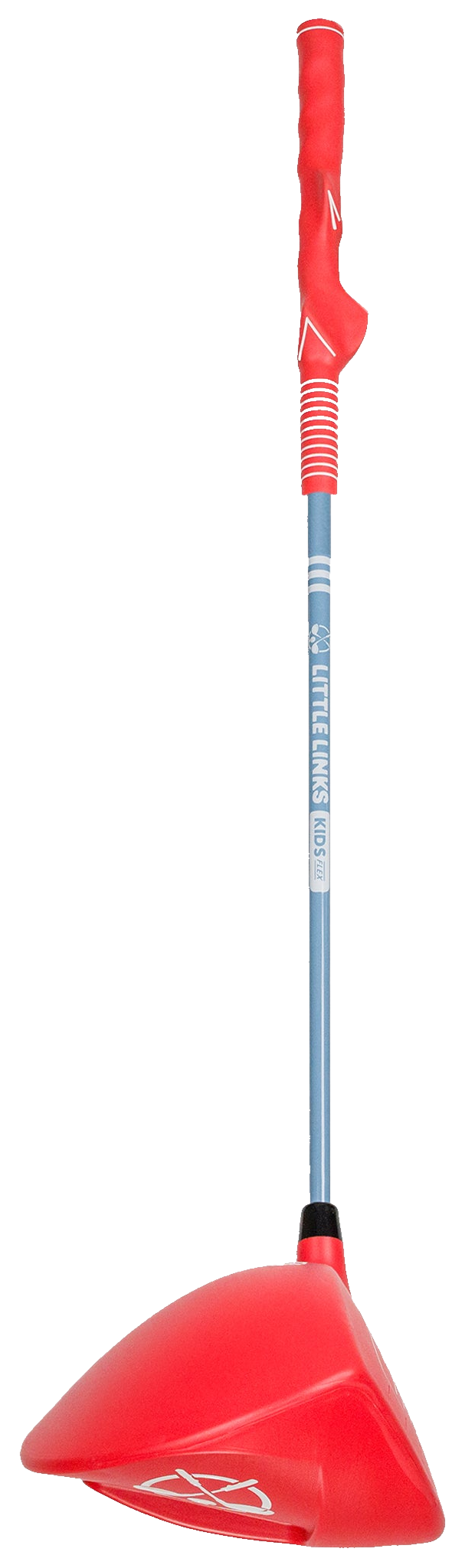
When you can, choose a club made for juniors: a lighter head, a more flexible shaft, and a thinner junior grip sized for small hands. You don’t need a full set to begin. One fitted driver, a few soft balls, and a backyard or range bay are enough for a first session. If you’re still deciding whether a driver is even the right first club, read should kids start with a driver or an iron.
Pick the right handedness
Let your child try slow movements from both sides with suitable lightweight play equipment in a clear space. Watch which side feels comfortable, then check right- or left-handed when choosing their club. Our handedness guide can help.
Choosing your Big Swing Driver
Use the height chart on the Big Swing Driver page to choose among its three sizes, then select right- or left-handed. If your child is between ranges, ask us for help. The right choice is the one they can comfortably use now.
More help: how to make golf fun for kids
FAQ
How do I choose a kids golf driver?
Measure your child and check the size chart for the specific driver. Choose a size they can comfortably control now and the right swing-side option. If they fall between ranges, ask for fitting help rather than guessing.
Should I buy a bigger kids golf driver so my child grows into it?
Avoid buying extra length only for a future growth spurt. An oversized club can be awkward to control now. Follow the manufacturer’s fitting guidance and ask for help if your child is between sizes.
Is a longer driver better for a kid?
Longer isn’t automatically better. Choose a driver that matches your child’s current height and lets them stand and swing comfortably. A junior coach or fitter can help if the size feels wrong.
Should I buy a junior driver or cut down an adult club?
A fitted junior driver is usually the better choice. Cutting down an adult club leaves a shaft that’s too stiff and a head that’s too heavy for a young swing, which makes the ball hard to get in the air. Junior drivers use lighter, more flexible shafts matched to a child's slower swing speed.
How heavy should a kids golf driver be?
Light enough that the child can swing it all the way to the top of the backswing without straining. PGA fitting guidance notes that an overly heavy club makes a junior struggle to reach the top of the swing, which leads to inconsistent shots. If the child drops the clubhead or can’t finish the backswing, the driver is too heavy.
Right or left handed driver for my child?
Match the driver to the side the child naturally swings from, which is not always their writing hand. Hand them a club and watch which way they turn to take a swing. U.S. Kids Golf treats swing side as part of fitting a junior club.