
Quick answer
Look for a club that fits your child's height, feels manageable to lift and swing, and has a grip their hands can hold comfortably. Check right- or left-handed before buying. If your child is reaching, struggling to lift the club, or losing balance, check the fit before asking them to swing harder.
The club may be part of the problem
When a child misses the ball, adults usually look at the swing first. That’s understandable, but early golf is often simpler than that. The club may be too long, too heavy, too stiff, too hard to hold, or paired with a ball and tee setup that asks too much of a new player.
A young beginner doesn’t need adult-style equipment logic. They need a tool that lets them stand naturally, keep both hands together, and make a small motion without the club pulling them out of balance.
Start with your child’s current height and what they can comfortably control. The first club should make it easy to get ready for a few playful swings.
What to check before the first swing
Use this checklist before blaming the child or buying a full set.
| Feature | What parents should check | Why it matters |
|---|---|---|
| Length | The child can stand naturally without reaching, crouching, or choking down too far. | A club that’s too long can make posture and center-face contact harder. |
| Weight | The child can lift the club and finish a small swing without losing balance. | A heavy club can make the clubhead control the child instead of the child controlling the club. |
| Shaft feel | The shaft is built for a junior swing, not an adult swing speed. | A very stiff shaft can make early swings feel harder to move and launch. |
| Grip | Both hands can sit together without the handle feeling like too much to hold. | Grip size affects whether the child can place hands comfortably and repeat the setup. |
| Hand selection | The club matches the child's right- or left-handed golf setup. | Handedness should be chosen around the child, not around whichever club is available. |
| Ball and tee setup | The ball type and tee height fit the room, yard, range, and club. | A good setup reduces unnecessary reaching, scooping, and frustration. |
| Session goal | The goal is one controlled contact attempt, not a full adult swing lesson. | The right club should make the first motion easier to organize. |
Length: the first visible mismatch
Length is usually the easiest problem to spot. If the child has to choke down most of the grip, stand far from the ball, or flatten the swing just to move the club, the club is asking for adult posture.
PGA guidance on junior club fit says a junior choking down more than about 1.5 to 2 inches is likely using a club that’s too long. The same guidance warns that a driver that’s too long can create timing problems and make it harder to hit the ball on the center of the face.
This doesn’t mean the answer is always the shortest club possible. It means the length should let the child stand naturally and make a small motion without fighting the club.
Weight and shaft feel: the part parents feel too late
A club can look like the right size and still feel wrong. Watch the backswing. If the club pulls the child off balance, drops behind them, or makes the child rush just to move it, weight may be the issue.
PGA's junior fit article also calls out club weight and shaft flexibility. It notes that overly heavy clubs can make children struggle to get the club to the top of the backswing, while modern junior clubs use lighter heads, lighter shafts, and flexible shafts to match a child's swing.
Parent check
Ask for one slow rehearsal swing with no ball. If the club is hard to lift, hard to stop, or hard to return to the ball area, the session is probably going to become a club-control problem before it becomes a golf lesson.
Grip: small hands need a clean start
Grip is easy to overlook because adults are used to adjusting their hands. Young kids are not. If the handle feels too large, both hands may not sit together comfortably, and the child may twist, split, or squeeze the club just to keep hold of it.
PGA guidance calls grip size a real junior fitting detail. That matters for parents because hand placement is often the first visible setup problem. Before correcting a child's swing, check whether the handle itself is making the setup harder.
For a deeper hand-placement guide, use how kids should hold a golf club.
Height and handedness should come before brand
U.S. Kids Golf fitting guidance starts with player height and swing side, then separates equipment by development level. That’s the right parent mindset: choose around the child first.
A right-handed club in the garage doesn’t help a child who needs a left-handed golf setup. A club meant for a much taller player doesn’t become a good beginner tool just because the child is excited to try it. Fit is not about making equipment perfect. It’s about removing the obvious friction before the first few swings.
If you need the age and height guide first, read kids golf club size by age. If you’re comparing adult hand-me-down clubs with child-sized clubs, read whether kids can use adult golf clubs.
The club is only one part of the setup
Even a good kids golf club can feel hard to use if the practice setup is wrong. A real ball in a tight space, a tee that’s too high or too low for the club, or a target that’s too far away can make a manageable swing feel impossible.
Start with the setting. Indoors, putting, target rolls, grip setup, no-ball swings, or foam-ball contact in a clear space may fit better than full swings. In a yard or range, match the ball and tee to the club and supervision level. For the tee setup, see how high kids should tee a golf ball. If missed contact is the main problem, use why a child keeps missing the golf ball.
What to look for in Big Swing
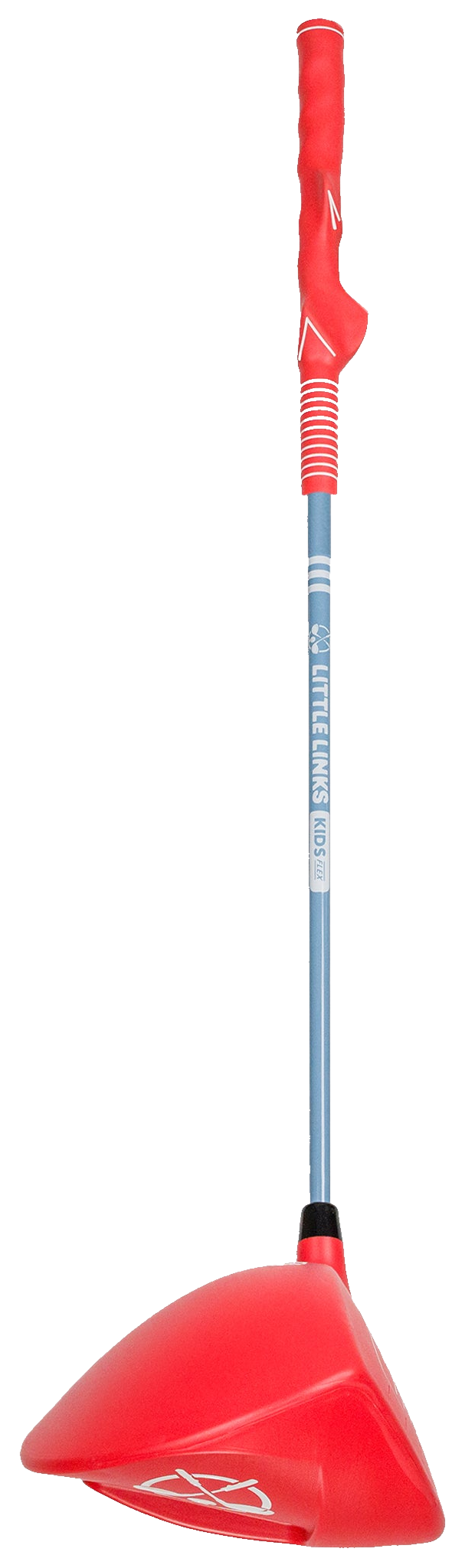
The Big Swing Driver has an oversized head, a flexible shaft, a training grip, and right- and left-handed options. Compare your child's height with its size chart and check that they can control the club comfortably. A club should fit the child holding it today.
What to try next
Before buying more clubs or correcting more swing pieces, ask one simple question: can my child control this club calmly for one small motion?
If yes, keep the session short and positive. If no, change the club, the ball, the tee, the target, or the practice space before asking the child to try harder. Kids golf gets easier to repeat when the equipment and setup make the first swing feel possible.
FAQ
What makes a kids golf club easier to swing?
A kids golf club is easier to swing when it fits the child's height, feels light enough to control, has a flexible shaft, uses a grip smaller hands can hold, matches handedness, and is paired with a practice ball and tee setup that fits the space.
How do I know if my child's golf club is too heavy?
Watch the child before the ball moves. If the club pulls them off balance, they struggle to lift it, or the backswing looks like the club is dragging the child around, the club may be too heavy for repeat practice.
Does shaft flex matter for junior golfers?
Yes. Junior golfers usually swing slower than adults, so a shaft that feels too stiff can make the club harder to move and harder to launch. PGA guidance notes that flexible junior shafts are one reason modern junior clubs are more playable than old cut-down adult clubs.
Is grip size important for kids golf clubs?
Yes. A grip that feels too large can make hand placement harder for a young player. PGA guidance calls out grip size as a real junior fitting detail, not just an adult equipment issue.
Can tee height make a kids golf club easier to use?
Tee height can help the setup match the club, but it should not be used to hide a poor fit. A useful tee setup lets the child make a small controlled swing without reaching, dipping, or trying to scoop the ball.
Where does the Little Links Big Swing Driver fit?
The Big Swing Driver has an oversized head, a flexible shaft, a training grip, and right- and left-handed options. Compare your child's height with its size chart and check that they can control the club comfortably. A club should fit the child holding it today.