
Quick answer
Measure your child's height before choosing a golf club. Age can help you start looking, but two kids the same age may need different sizes. Check the club's own size chart, choose right- or left-handed, and look for a club your child can hold and swing comfortably now.
Age ranges are a starting point
A label like Ages 2-5 means ages 2 through 5. It should help you narrow the search, not make the whole decision. Two kids can be the same age and need different equipment because they’re different heights, have different coordination, and handle safety cues differently.
That’s why this guide separates age bands from the final fit check. Age tells you where to start. Height, handedness, supervision, and interest tell you whether the club actually makes sense.
| Age range | What usually matters most | Buying direction |
|---|---|---|
| Ages 2-5 | Short sessions, safety, soft balls, and a club that feels manageable. | Start simple. One right-sized club is often better than a full set. |
| Ages 6-8 | More repeat interest, better listening, and more room for real practice. | Check height and handedness before choosing a real kids club. |
| Ages 8-10 | Fit, swing space, confidence, and whether the child still wants a forgiving first-club setup. | Do not buy by age alone. Confirm the size range and current height. |
| Ages 10+ | Current height, strength, goals, and whether junior equipment still fits. | Some kids still need junior gear. Adult clubs are not automatic. |
Keep it simple, supervised, and playful. A single manageable club can be enough.
Check height and handedness as the child starts wanting more real practice.
Use current fit and interest, not the age number alone.
Some kids still need junior equipment. Adult clubs are not the default.
Height beats age when the choice is close
U.S. Kids Golf's fitting experience uses height and handedness as part of junior club selection. That’s the right idea for parents: age is helpful, but height is usually the better guide to fit.
If a child is between two age ranges, don’t force the lower or higher label. Look at whether the club is easy to hold, whether the child can move it without fighting the weight or length, and whether they can stay safe while swinging.
- Height: Check the child's current height before relying on the age label.
- Handedness: Right- and left-handed options matter when the child has a clear preference.
- Control: The child should be able to move the club without the club dragging the session around.
- Setting: Foam, plastic, or real balls depend on the space and supervision.
Already have a club? See how to check whether your child has outgrown their golf club before choosing the next size.
Older beginners need a good fit too
An 8-, 9-, or 10-year-old can be brand new to golf. They still deserve equipment that makes the first swings feel manageable. Don’t move straight to adult clubs just because they’re older.
Check their current height, natural swing side, and ability to control the club. If you’re unsure where junior sizing ends for your child, ask a coach or fitter.
Choosing a Big Swing size
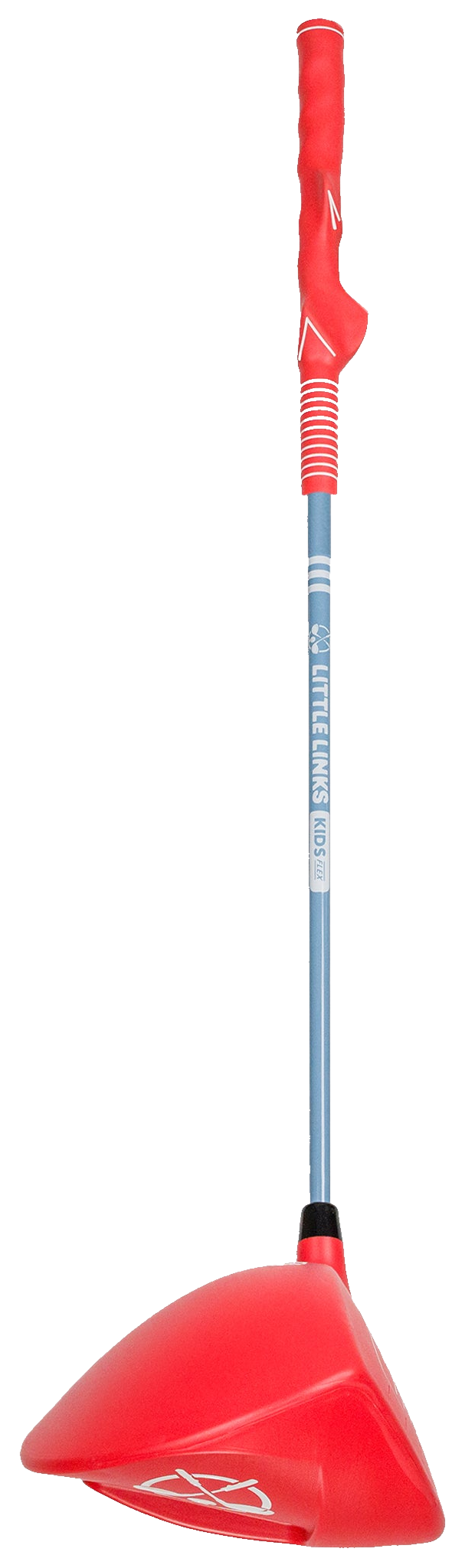
The Big Swing Driver comes in three sizes, with height guidance on the product page. Measure your child now and compare that measurement with the chart. If the ranges overlap or you're unsure, ask us for help before ordering. The ages used to browse these guides aren't product sizes.
Simple buying checklist
Before buying, run through the practical checks. This keeps the decision grounded in the child in front of you instead of a generic age label.
- Age range: Start with the nearest range: 2-5, 6-8, 8-10, or 10+.
- Height: Confirm the product's current height guidance or fitting chart.
- Handedness: Choose right- or left-handed if the child has a clear preference.
- Space: Match the club and ball setup to the actual place they will practice.
- Interest: Buy for the child who wants to come back, not for an adult timeline.
Next step if the fit checks out
Review the Big Swing Kids Golf Driver size options, handedness, included balls, and tee setup, then choose the size that matches the child now instead of buying only for a future age.
FAQ
What size golf club should a 2- to 5-year-old use?
Use age only as a starting point. For ages 2-5, look for a short, manageable kids club, close supervision, soft or appropriate balls, and a setup that keeps the session playful and safe.
What size golf club should a 6- to 8-year-old use?
For ages 6-8, height and handedness start to matter more. A child may be ready for a real kids club if they can follow safety cues, have room to swing, and want to keep practicing.
Can an 8- to 10-year-old still use Little Links?
Yes, depending on the child's size, interest, and fit. Little Links product information lists ages 2-10+ and includes age and height sizing context, so families should match the child to the current size range rather than assuming the club is only for toddlers.
Should parents choose kids golf clubs by age or height?
Start with age to narrow the choices, then check height, handedness, strength, and the kind of practice the child will do. Height is usually a better fit check than age by itself.
Does a 10-year-old need adult golf clubs?
Not automatically. Many 10-year-olds still need junior equipment. The better question is whether the club length, weight, and grip fit the child's current body and swing space.