
Quick answer
Watch which way your child naturally likes to swing. Their writing hand is a clue, but it doesn't always tell you which golf club they need. Let them try slow swings from both sides in a clear space. If they keep switching, take your time or ask a junior coach to help before you buy.
Handedness is more than writing hand
Parents usually know whether a child writes, colors, or throws with the right or left hand. Golf can still feel confusing because the club uses both hands, the body turns, and the child may naturally swing from a side that doesn’t match the hand they use for small tasks.
CaddieHQ's guide to right- and left-handed golf clubs makes the same practical point for new golfers: writing hand doesn’t automatically decide golf side because a golf swing is a full-body movement. For a child, the your part is to observe the swing before locking in the equipment.
Keep it simple
Watch the swing side first. Then check size, right- or left-handed option, and current availability before buying.
A simple home handedness test
Keep this short and playful. You’re not trying to coach a perfect swing. You’re looking for the side that looks more natural.
- Use a light object. A junior club, broom, toy bat, or foam-club setup is enough for the test.
- Give one target. Ask the child to make a slow swing toward a soft ball, balloon, or pretend target.
- Try both sides. Let your child try a slow movement from each side in a clear space. Keep the target direction the same and use equipment suited to the side they’re trying.
- Watch balance and comfort. Look for the side where the child turns more naturally and can repeat the motion without fighting the object.
- Do not decide from one swing. Repeat on another day if the child is tired, distracted, or switching sides.
SportsRec's right-versus-left golf guide notes that golf clubs are built for right- and left-handed players and suggests beginners try both sides when they’re unsure. That maps well to a young child: observe first, then choose the club side.
How to read what you see
Use clues, not pressure. A child who looks athletic on one side today may still experiment tomorrow, especially when they’re young.
| Clue | What it can mean | Parent note |
|---|---|---|
| Writing or coloring hand | A useful clue, but not the whole answer. | Do not order only from this clue if the swing looks better the other way. |
| Throwing hand | Can show which side feels stronger or more coordinated. | Pair this with the swing test instead of treating it as a rule. |
| Bat, hockey, or broom swing | Often closer to the golf motion than writing hand. | Watch which side the child chooses before you correct them. |
| Balance after the swing | The more natural side often looks less forced. | A calm repeatable motion matters more than one hard swing. |
| Hand position on the handle | The lead hand sits higher on the handle. | For right-handed golf, left hand is higher. For left-handed golf, right hand is higher. |
What if a young child keeps switching sides?
Do not turn the handedness question into a test the child can fail. HealthyChildren.org from the American Academy of Pediatrics notes that some children show a hand preference early and others take longer, and parents should not pressure a child to use one hand or rush the process.
For golf, that means the early answer can stay flexible. If your child swings both ways, use soft-ball play, short sessions, and simple targets while you watch. If a lesson is coming up, ask the coach to check which side looks more natural before you buy a larger set.
What a right-handed kids golf setup looks like
For a right-handed golf swing, the left hand sits higher on the handle and the right hand sits below it. Use a right-handed club with the face pointing toward the target.
If your child naturally sets up this way and the motion looks more balanced than the left-handed side, a right-handed junior golf club is usually the equipment path to check first.
What a left-handed kids golf setup looks like
For a left-handed golf swing, the right hand sits higher on the handle and the left hand sits below it. Use a left-handed club with the face pointing toward the target.
If your child naturally mirrors the right-handed setup and looks more comfortable from that side, check left-handed junior golf club options instead of forcing the right-handed version because it’s easier to find.
After handedness, check fit
Handedness doesn’t replace fit. A club can be the correct side and still be too long, too heavy, or hard for the child to control.
The U.S. Kids Golf junior fitting page includes both player height and swing side in its fitting flow. That’s the right order of thinking for parents: choose the side the child can swing, then choose a size that matches the child now.
For more detail on the size question, use the Clubhouse guide to kids golf club size by age. If the child is still choosing the first club type, read what golf club should a child use first before buying a full set.
Choose the swing side that feels natural
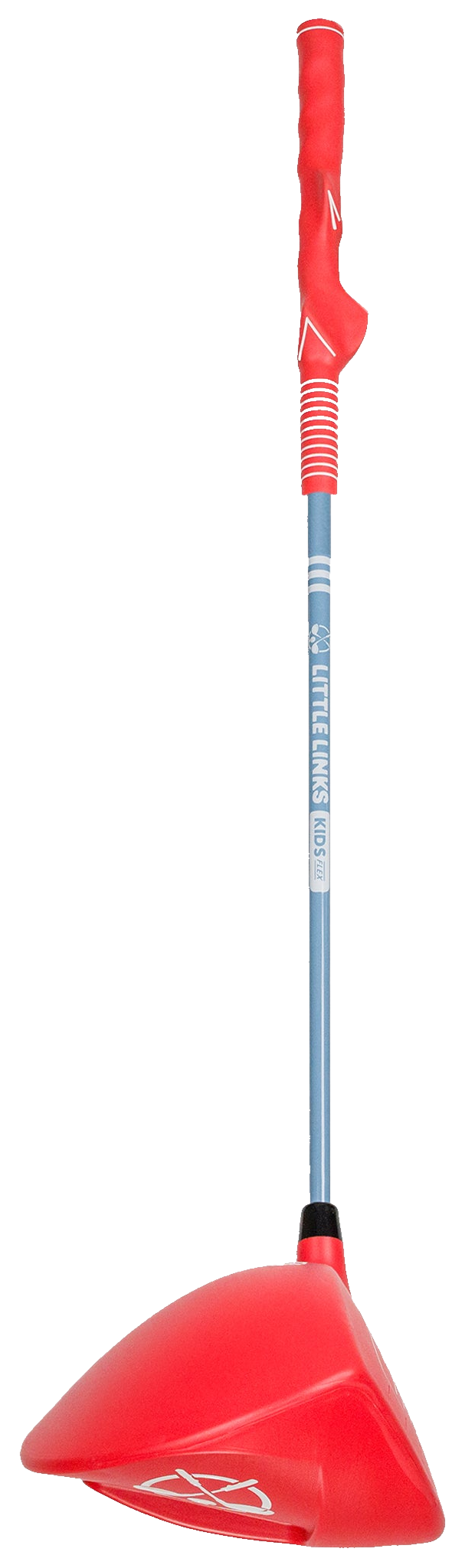
The Big Swing Driver has right- and left-handed options. Watch your child swing before choosing, then check the size chart. There's no need to rush the decision if they're still trying both sides.
What to do next
If you know the side but the hands look awkward, go to how should kids hold a golf club. That guide covers lead hand, trail hand, 10-finger grip, and training-grip setup.
If you’re still deciding whether the child is ready for real equipment, compare a plastic golf set vs real kids golf club first. Handedness matters most once the child is ready to swing a real right- or left-handed club.
FAQ
How do I know if my child needs right- or left-handed golf clubs?
Let the child make a few slow practice swings from both sides with a lightweight club, broom, or toy bat. Choose the side that looks more natural, balanced, and repeatable, then check that the club size and right- or left-handed option fit before buying.
Does writing hand decide golf handedness?
No. Writing hand is only a clue. Some kids write or throw with one hand but feel more natural swinging from the other side, so watch the golf swing direction before choosing right- or left-handed equipment.
Which hand goes on top for a right-handed child golfer?
For a right-handed golfer, the left hand sits higher on the handle, closer to the end of the grip. The right hand goes below it.
Which hand goes on top for a left-handed child golfer?
For a left-handed golfer, the right hand sits higher on the handle, closer to the end of the grip. The left hand goes below it.
What if my child swings both ways?
If a child keeps switching sides, stay patient and avoid buying a large set too early. Use soft-ball play, short sessions, and repeated observation, or ask a coach to watch before locking into more equipment.
Should a 3-year-old use right or left-handed golf clubs?
Use the side the 3-year-old naturally returns to during slow, supervised swings, not just the hand they color or throw with. If they switch sides often, keep practice light and wait before buying more clubs.
Can a child switch golf sides later?
Yes, a beginner can switch sides later, especially early on. The goal is not to lock the child into a side forever. The goal is to choose the side that makes the current session safer, simpler, and more repeatable.
Do left-handed kids need special golf clubs?
Left-handed golfers need clubs built for a left-handed swing. Right- and left-handed clubs are not interchangeable for normal shots, so check the right- or left-handed option before choosing a junior club.