
Quick answer
Give your child a game they can enjoy right away: a soft ball, a close target, a club that fits, and a clear space to swing. Celebrate the little moments, let them choose a target, and keep the tips to one at a time. You can stop before the bucket is empty.
Contact is the first version of fun
A child doesn’t need to understand swing plane to enjoy an early golf session. A child needs to feel, "I can do this." In beginner golf, that usually starts with contact: the club finds the ball, the ball moves somewhere visible, and the parent reacts like the moment is worth repeating.
That’s why the first session should not feel like a mini lesson. It should feel like a simple challenge the child can win: make the ball move, hit the towel, knock the foam ball into the basket, or take one safe swing that sounds better than the last one.
Keep it simple
Make the first job easier before you add more instruction.
The five-part fun plan
Use this plan when a child is curious about golf but not ready for adult-style practice.
- Choose a safe space: clear people, pets, glass, cars, and hard surfaces from the swing and ball path.
- Pick one goal: move the ball, hit a towel, clip a tee, or make three safe swings.
- Use a reachable target: a laundry basket, hula hoop, towel, pool noodle gate, or patch of grass works better than a faraway flag.
- Say one cue only: "feet still," "brush the grass," or "eyes on the ball" is enough for most young beginners.
- Stop on a good moment: leave while the child still wants another turn.
If the session starts turning into a negotiation, the game is done. Read how long kids should practice golf if you need age-by-age session lengths and stop signals.
Play before mechanics
HealthyChildren.org's sports-readiness guidance says sports readiness depends on physical, mental, and social skills. It also notes that younger children have limited attention and learn through play, with shorter practices, flexible rules, and less focus on competition.
You can use the same idea in golf. A 4-year-old who misses the ball five times doesn’t need five corrections. They need a lower tee, a bigger target, a softer ball, a slower swing, or a game that makes the miss feel smaller.
A few playful swings can be part of an active family day. Golf doesn’t need to become a formal practice session every time a club comes out.
Easy kids golf games by setting
The right game depends on where you’re. Keep the target obvious and the score simple.
| Setting | Game | Parent goal |
|---|---|---|
| Indoor | Roll a ball to a towel target or make no-ball balance swings. | Make setup familiar without full-speed swings. |
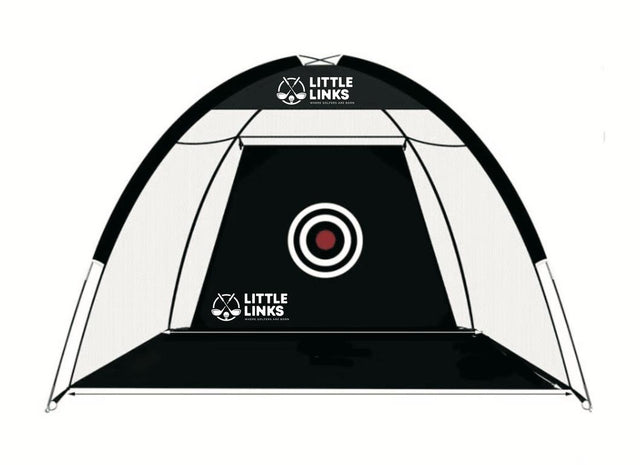
| Backyard | Hit foam balls toward a basket, blanket, or chalk circle. | Protect space while giving the child a real target. |
| Range | Pick one close target and count good contact, not distance. | Keep the shared space calm, short, and safe. |
| After a lesson | Repeat one coach cue for five balls, then switch to a target game. | Practice without turning home into a second lesson. |
If you’re practicing outside, use the safety setup from safe backyard golf practice for kids. If you’re going public, read how to take a kid to the driving range before the first trip.
What parents should say
Think about how you’d like your child to remember the afternoon. A little encouragement and a chance to choose the next game can mean more than another swing tip.
| Instead of | Try |
|---|---|
| "You’re doing it wrong." | "Let's make this one easier." |
| "Keep your head down, arms straight, and turn." | "One cue: brush the grass." |
| "Hit another one until you get it." | "That one moved. Want one more target?" |
| "We paid for the bucket, so finish it." | "Let's end on that good swing." |
Make it fun by age
Younger kids usually need less instruction and more visible success. Older kids can handle more challenge, but they still need choice and a clean way to stop.
| Age range | Make it feel like | Keep it from feeling like |
|---|---|---|
| Ages 2 to 5 | A pretend game with a ball, tee, target, and quick celebration. | A lesson with several rules at once. |
| Ages 6 to 8 | A target challenge with one cue and a small number of balls. | A grind for perfect contact. |
| Ages 8 to 10+ | A choice-based challenge: target, club, ball flight, or score they can track. | A parent-run correction session after every swing. |
PGA's parent guide to golf fitness for kids supports the same broad direction: youth golf works better when movement, confidence, and suited to their age support come before adult-style mechanics.
Help that first swing feel inviting
The Big Swing Driver has an oversized head and a training grip for little hands. Check the fit, choose a practice ball for your space, and start with a nearby target. Bring the encouragement; your child can bring the imagination.
More help: plastic golf set vs real kids golf club · kids golf club size by age
When golf stops being fun
Golf stops being fun when the child has to earn every smile. Watch for the swing getting careless, the child looking away before the ball is hit, frustration changing their posture, or safety rules becoming harder to follow.
When that happens, don’t add three more instructions. Lower the difficulty or stop. Use a bigger target, a shorter session, a tee, a softer practice ball, or a simpler game. A good ending is part of the training.
A happy place to stop
End with "we can do this again," not "we are not leaving until you hit one right."
FAQ
How do I make golf fun for my child?
Make golf fun by giving your child one simple job, one clear target, and a short session that ends on a good moment. Do not start with a full swing lesson. Start with safe contact, a game, and a reason to want another turn.
What are easy golf games for kids at home?
Try rolling a ball to a towel target, tapping foam balls toward a laundry basket, making three safe practice swings, or taking turns naming a target before each shot. Keep the space controlled and switch games before the child loses interest.
How do I keep my child from getting frustrated with golf?
Lower the difficulty before adding more instruction. Use a bigger target, a shorter session, a tee, a softer practice ball, or a right-sized club. Stop when frustration changes the swing or the child stops listening to safety rules.
Should I teach golf mechanics or just let my child play?
For young beginners, play should come first. Use one simple cue when it helps, then return to the game. Formal mechanics can wait until the child can follow directions, stay safe, and still enjoy the session.
What makes a first golf session feel successful for kids?
A successful first session is safe, short, and easy to repeat. The child makes some kind of contact, understands one rule, gets a positive reaction, and leaves wanting another turn.
What equipment helps make kids golf more fun?
Right-sized equipment helps because the child is not fighting an adult-scale club. Match the club, ball, tee, handedness, and practice space to the child, then keep the session focused on one goal.