
Quick answer
Start with one club your child can use for the game you're playing. A putter works for rolling games, a short iron for little chips, and a child-sized driver for supervised swings off a tee. If you're heading to a lesson, ask the coach which club to bring before buying anything.
Start with the session, not the bag
The first club question gets easier when you stop asking, "What should my child own?" and start asking, "Where will this child actually use it this week?"
Give your child a first game that feels welcoming and easy to try. If you’re still wondering whether they’re ready, read our guide to getting started.
If you’re still deciding whether your child is ready to start at all, read what age should a child start golf before choosing equipment.
Keep it simple
Choose one first club for the next real practice setting. A full junior bag can wait until the child has more interest, more space, or a coach asking for more clubs.
Which club fits your first game?
Use this as a practical starting point before you buy or borrow.
Pick the first club by where the child will actually play this week.
| Starting situation | First club to consider | Why it can work |
|---|---|---|
| Indoor play or putting green | Putter | It keeps swings small and turns golf into simple rolling games. |
| Short targets or tee shots in a small area | Short iron or 9-iron style club | It can teach setup and contact without requiring a full club set. |
| Supervised full swings in open space | Child-sized driver | It gives the child one club for full swings in open space. |
| First lesson or camp | Whatever the coach requests or provides | The coach's plan should guide the equipment for that session. |
| Child already loves golf and wants variety | Small junior set | More clubs make sense once the child is ready for different shots. |
The putter-first path
A putter can be the simplest first club for a child who is starting indoors, on a practice green, or through miniature golf style games. The swing is small, the ball stays on the ground, and the target is easy to understand.
The U.S. Kids Golf Early Start parent guide presents one starter path that begins with a putter, then moves to a 9-iron training club, then adds a lofted fairway wood or hybrid for a starter set. That doesn’t mean every child must start that way, but it’s a useful path for parents who want a slow, low-pressure introduction.
Choose a putter first when
The child is very young, the space is small, the session is more like a game, or you want the least intimidating first version of golf.
The short-iron path
A short iron can be a practical second step when the child is ready to see the ball pop up or land near a short target. It also gives parents a middle ground between putting and full driver swings.
The important part is fit. The same U.S. Kids Golf guide warns that club length and weight matter for young golfers, and the U.S. Kids Golf fitting page organizes junior equipment around player height. If the club is too long or heavy, the first session can turn into a fight with the equipment.
Choose a short iron first when
The child has a safe target area, wants more than putting, and can hold the club steady without losing balance.
The driver-first path
Some kids want the big swing first. That can be fine when an adult controls the space, the ball choice, and the bystanders. The mistake is not starting with a driver. The mistake is using any club in a space where the child can’t swing and miss safely.
If the first club will be used in the yard, check the Clubhouse guide to safe backyard golf practice for kids before choosing ball type or swing area.
JOLF's first-club article makes the case that a driver can work as one simple first club for some children ages 3 to 6 because it reduces club-choice confusion and gives the child one clear tool. Treat that as one coaching philosophy, not a universal rule.
Choose a driver first when
The child wants full swings, the space is open and supervised, and the club is sized for the child now instead of for a later growth spurt.
One club or a full junior set?
One club is enough for many first sessions. It reduces decisions, keeps the setup lighter, and helps the parent focus on safety and contact instead of explaining every club in the bag.
PGA of America equipment guidance points parents toward junior clubs that fit the child in length, shaft, weight, and grip. It also supports adding clubs as the young golfer progresses. That keeps the practical parent answer simple: start with what the child can use now, then add more when there is a reason.
A full junior set starts to make more sense when the child is practicing different shot types, taking lessons where the coach wants several clubs, or asking for more variety. If your child is heading to a first lesson, read what kids should bring to a first golf lesson before buying, because some programs provide equipment.
- Start with one real session. Backyard, putting green, range, or lesson.
- Pick the one club that fits that session. Putter, short iron, or driver.
- Check height and handedness. Use a junior fitting guide or coach if you’re unsure.
- Watch the child's reaction. If they want another turn, you have enough to keep going.
- Add clubs only when there is a reason. More clubs should solve a real practice need.
How to know the first club fits
You don’t need a technical fitting session for every first swing, but you do need to avoid adult-scale equipment that makes early golf harder than it has to be.
- Control: The child should be able to start, stop, and reset without the club dragging them off balance.
- Space: Match the club to the actual hitting area and ball type.
- Interest: The first club should invite another short session, not turn golf into homework.
If you need help with sizing, use the Clubhouse guide to kids golf club size by age. If you need help with hand placement, read how kids should hold a golf club. If the child is still in the play-equipment stage, compare plastic golf sets versus real kids golf clubs after this guide.
For a child who's ready for big swings
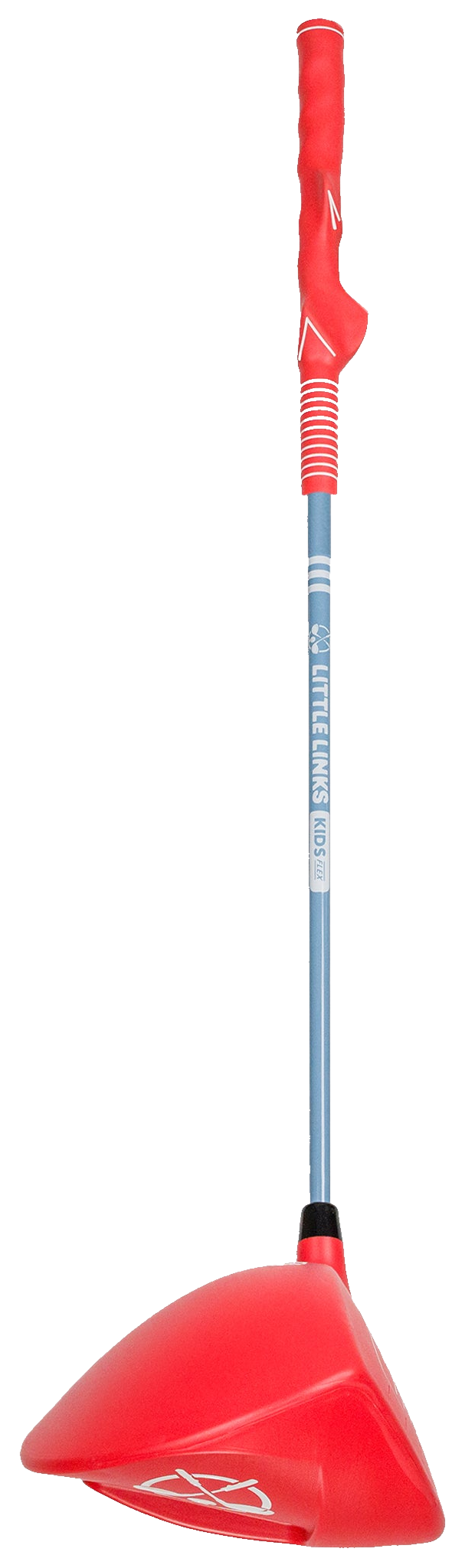
If your child wants to hit from a tee, the Big Swing Driver is made for those early swings. Match it to their height and swing side, and use a clear space with an adult supervising. For putting games or a coach's lesson, use the club that activity calls for.
FAQ
What golf club should a child use first?
Start with one club that fits the next real session. Choose a putter for rolling games, a short iron for small targets, or a child-sized driver for supervised full swings. Add more clubs only when the child needs more shot variety.
Should a child start with a putter or driver?
Either can make sense. A putter is simple for rolling games and small spaces. A driver can make sense when the child wants full swings and has enough supervised room. The better choice is the one the child can control safely and wants to use again.
Do kids need a full set of golf clubs to start?
No. Many beginners can start with one right-sized club, a safe ball setup, and a clear target. A full junior set can wait until the child has more interest, more practice variety, or a coach who wants them to learn several clubs.
Is one golf club enough for a beginner child?
Yes, one club can be enough for early sessions if it fits the child and matches the space. One club reduces choice, keeps the setup simple, and lets the parent focus on safety, contact, and fun instead of club selection.
What first club works for backyard practice?
For backyard practice, choose the club and ball together. A putter or short iron may work for small target games, while a child-sized driver needs a clear swing zone, supervised ball path, and foam or plastic balls when the space is limited.
When should a child get a full junior golf set?
Consider a fuller junior set when the child is interested enough to practice different shots, has a safe place to use them, and can handle more than one club without frustration. If lessons are involved, ask the coach what clubs they want the child to bring.
How do I know if my child's first golf club fits?
Check the child's height, handedness, and ability to control the club. If the club looks too long, too heavy, or hard to return to the ball, use a junior fitting guide or ask a coach before buying more equipment.