
Quick answer
A plastic golf set can be a fun way for little ones to copy you and try the game. When your child keeps asking to hit balls, can follow simple safety directions, and has room for supervised swings, consider a real kids club that fits their height and natural swing side.
The real question is when to switch
Most families are not really asking whether plastic is bad or real is always better. They’re asking, "Is my child still just playing around, or are they ready for a first club that behaves more like golf equipment?"
That distinction matters because both stages can be useful. A plastic set can make the game feel approachable when a child is tiny, curious, and still learning how to move. A real kids club fits a different moment: the child wants to swing at balls, the space is safe, and an adult can manage the session.
A simple way to choose
If your child is pretending, exploring, or playing in a tight space, plastic can be enough. If your child is asking to hit balls and can stay safe around a swing, start thinking about a right-sized real kids club.
When a plastic golf set makes sense
Plastic golf sets are not a failure. For very young kids, they can be a low-pressure first invitation into golf. The point is not technique. The point is letting a child copy a parent, roll balls toward a target, carry a little club around the yard, or swing without the stakes feeling too high.
Plastic is especially useful when the space is limited. If the child is indoors, in a hallway putting game, on a patio, or in a small backyard where a real ball would be a problem, plastic equipment keeps the session closer to play.
- Your child is very young and mainly wants to copy a grown-up.
- You need a soft, low-pressure setup for indoor or tight-space play.
- The goal is movement, turn-taking, and interest, not contact quality.
- Your child loses interest quickly and does better with short games.
When a real kids golf club makes more sense
A real kids golf club starts to make sense when the child is past pretend-only play. You don’t need a perfect swing. You do need interest, supervision, and enough room to keep people outside the swing path.
This is where parents should stop thinking only about age. A 3-year-old who listens, has adult help, and swings in a safe open area may be ready for a simple real-club session. A 6-year-old who swings wildly in a crowded room may not be ready yet. Readiness beats the birthday.
Plastic set vs real kids club
Use this as a decision guide, not a scoreboard. The right choice changes as the child grows, listens better, and wants more real golf moments.
| Decision point | Plastic golf set fits when | Real kids golf club fits when |
|---|---|---|
| Main goal | Play, copying, rolling balls, and first exposure. | Supervised swings, ball contact, and a more golf-like setup. |
| Space | Indoor areas, patios, tight yards, or anywhere a miss needs to stay gentle. | Open yards, range bays, practice mats, parks, or safe hitting areas. |
| Ball choice | Plastic or soft balls that keep play low pressure. | Foam, plastic, or real golf balls only when the setting is appropriate. |
| Fit | Less precise fit is usually fine because the goal is play. | Size, handedness, club length, and grip comfort matter more. |
| Supervision | Still supervised, but lower risk for pretend play. | Close adult supervision every session, especially around other people. |
| Buying moment | You’re testing interest or giving a simple first golf-themed toy. | The child already shows interest and the gift should support real practice. |
Plastic fits play and copying. A real kids club fits supervised swings and ball contact.
Plastic fits tight indoor spaces. A real club needs open, supervised space.
Plastic can be less precise. A real kids club should be chosen around size and handedness.
Plastic tests interest. A real club supports the child who already wants to keep swinging.
The switch test for parents
You don’t need a long checklist. Watch the session. If the child only wants to wave the club, chase a ball, and play make-believe, keep it simple. If they keep asking to hit another one, start lining up the next stage.
Switch when three things are true
Your child wants to swing, can follow a simple safety cue, and has a supervised space where misses are not a problem. If one of those is missing, stay with plastic or soft-ball play for now.
- Interest: They ask to try again instead of being pushed into it.
- Safety: They can wait, stand clear, and stop when asked.
- Space: You can keep people, windows, pets, and fragile things out of the swing area.
- Session length: They can enjoy a few minutes and finish before it turns into a battle.
What right-sized means for a first real club
For a real kids club, fit matters more than a product label. A club that’s too long or awkward can make the first session harder than it needs to be. A better starting point is the child's height, handedness, and the type of practice they will actually do.
U.S. Kids Golf's fitting page uses player height, swing side, and system type as part of its junior fitting flow. That doesn’t mean every family needs a full fitting session before the first swing. It does mean "they’re 4, so buy any 4-year-old club" is too simple.
- Height: Start with the child's current size, not the age printed on a box.
- Handedness: Right- and left-handed options matter if the child has a clear preference.
- Weight and length: A child should be able to move the club without fighting it.
- Ball and setting: Foam or plastic balls fit many beginner setups better than real balls.
Keep the first stage active, not over-coached
The early goal is not to turn a preschooler into a technical golfer. The CDC points parents toward safe, age-appropriate movement for children, and HealthyChildren.org, from the American Academy of Pediatrics, emphasizes readiness, age-appropriate equipment, safety, and fun over pressure.
That matches the practical golf answer: start with whatever setup keeps the child safe and curious. If plastic keeps the session light, use plastic. If a real kids club makes the child feel more connected to golf and you can supervise the swing safely, that can be the next step.
For grandparents and gift buyers
If you’re buying for a grandchild, the stronger question to ask the parent is not "plastic or real?" Ask where the child will use it. A child with a small apartment hallway needs a different gift than a child with a backyard, a parent who golfs, and a safe space to swing.
Buy plastic when the child is very young, the space is tight, or the parents mainly want pretend play. Buy a real kids club when the child already asks to swing, has adult supervision, and the gift should feel like something they can grow into through real practice moments.
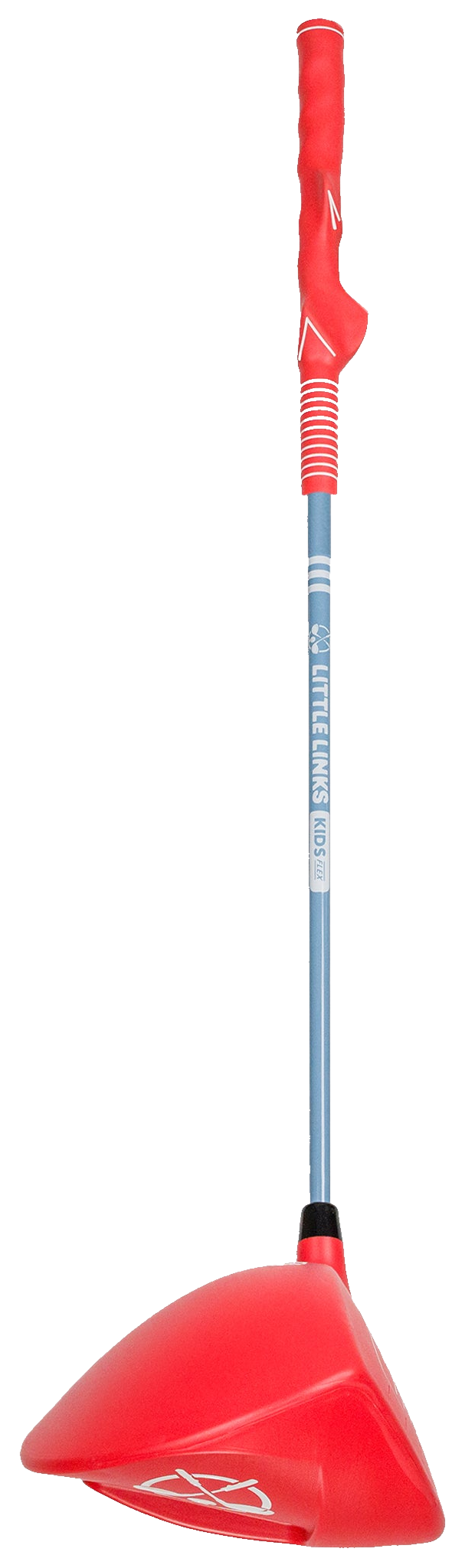
If that real-club moment is already here, use the Big Swing Kids Golf Driver product page to check size range, handedness, included balls, tees, and grip setup before choosing the gift.
Ready to move beyond a play set?
When your child wants to hit balls with a real kids club, the Big Swing Driver gives them an oversized head and a training grip to help them get started. Check the size and right- or left-handed option before choosing. Keep those first swings short, supervised, and fun.
Plastic vs real kids golf clubs: FAQ
Are plastic golf clubs bad for toddlers?
No. A plastic golf set can be useful for very early play, especially indoors, in tight spaces, or when the goal is simply letting a child copy a grown-up. The key is to keep it safe, supervised, and low pressure.
When should a child switch from plastic golf clubs to a real kids golf club?
Switch when the child is interested, can follow simple safety directions, has enough supervised space to swing, and wants to hit balls in a setting where a real club makes sense.
Can a 3-year-old use a real kids golf club?
Some 3-year-olds can use a real kids golf club with close adult supervision, soft or appropriate balls, and a safe space. Others are better off staying with plastic or foam play a little longer.
Should grandparents buy a plastic golf set or a real kids golf club?
For a very young child who is just pretending and playing indoors, a plastic set is the safer gift. For a child who already asks to swing, has adult supervision, and has outdoor space, a right-sized real kids club can be the more useful gift.
Do kids need a full golf set first?
No. Many young kids are better served by one simple club, a safe ball setup, and a clear target. A full set can wait until the child is older, more interested, and ready for more structured golf.
What matters more than plastic vs real?
Safety, fit, supervision, and interest matter more than the label. The right choice is the one that lets the child have a safe, fun first experience and makes them want to come back.
Sources
These sources support the readiness, activity, youth golf, fitting, and product-detail claims in this article. They do not endorse Little Links or any specific equipment choice.