
Quick answer
There isn't one perfect age to start golf. If your child is curious, can follow a simple safety direction, and has an adult keeping the space clear, try a few playful swings. For toddlers and preschoolers, rolling games and soft practice balls are a good place to begin. Lessons can come later, when your child wants more and is ready to listen to a coach.
The better question is readiness, not age
Parents usually search for one clean answer because it feels like there should be a correct age. Golf is not that tidy. One child may love copying a parent at age 3, while another may not care until age 7. Both can be normal.
The useful question is whether golf can be introduced without pressure. If the child is curious, can stay safe around a club, and can enjoy a few minutes of trying, you can start. If the child is frustrated, tired, or not interested, stop and protect the future relationship with the game.
The readiness test
If your child wants to try, can listen to a simple safety cue, and has room to swing with adult supervision, start with a few playful swings. If they lose interest, the right move is to pause, not push.
Signs your child is ready to try golf
A young child doesn’t need a polished swing to enjoy golf. They need space, a simple target, and a few successful moments. Early golf is closer to a backyard movement game than a formal sport.
The clearest readiness sign is interest. If your child asks to hit a ball, copies a grown-up, wants to carry a club, or lights up when the ball moves, that’s enough to begin carefully.
- They can stand in one place and swing with adult supervision.
- They understand a basic safety cue like waiting their turn.
- They like hitting, rolling, tossing, or chasing balls.
- They can enjoy a short session without the activity turning into a battle.
A simple age-by-age guide
Every child develops differently, but age can still help set expectations. The younger the child, the more golf should feel like play. As they get older, you can add more structure only if they’re asking for it or responding well.
| Age range | Best focus | Keep it light by avoiding |
|---|---|---|
| 2-3 | Rolling balls, safe movement, tiny swings, copying a grown-up. | Formal lessons, scorekeeping, or technical corrections. |
| 4-5 | Backyard target games, short swings, contact, and small wins. | Comparing distance or turning every swing into instruction. |
| 6-8 | Simple setup habits, grip comfort, target games, and beginner clinics if they’re interested. | Over-coaching mechanics before the child enjoys the game. |
| 9+ | More structure, lessons, range time, or course play when they ask for it. | Pressure that makes golf feel like homework. |
Rolling balls, safe movement, tiny swings, and copying a grown-up. Avoid formal lessons.
Backyard target games, short swings, contact, and small wins. Avoid comparing distance.
Simple setup habits, grip comfort, target games, and beginner clinics if they’re interested.
More structure, lessons, range time, or course play when they ask for it.
What a good first session looks like
Make the first game easy to join in. Choose a close target and celebrate whatever your child enjoys: a little tap, a ball rolling toward the towel, or a turn taken safely.
The goal is not to build a perfect swing in one afternoon. The goal is to create a good first memory: "I hit it. Everyone smiled. I want to try again."
- Set the space. Clear the swing area and keep people outside the club path.
- Pick one target. Use a bucket, towel, hula hoop, or patch of grass.
- Keep turns short. A few good swings beat a long session that ends in frustration.
- Stop early. Leave while the child still has energy and curiosity.
Backyard, range, or course?
Home can be a relaxed place to start if there’s enough room. Choose a simple game that suits the space. If there isn’t clearance for a club, roll a soft ball toward a target by hand.
The range can be a good next step when the child understands safety and wants to hit more balls. Start with a small number of swings, choose an off-peak time if possible, and keep expectations modest. The course usually comes later, when the child can stay safe, move with the group, and enjoy short stretches of play.
Simple order
Try home play, a range visit, or a few casual holes as your child’s interest grows. There’s no required order; choose the setting you can supervise comfortably.
What equipment matters at the beginning?
Beginner equipment should make the first session easier to manage. A child doesn’t need a full junior set immediately. For many families, the useful starting setup is a safe space, a few appropriate balls, and one club the child is excited to pick up.
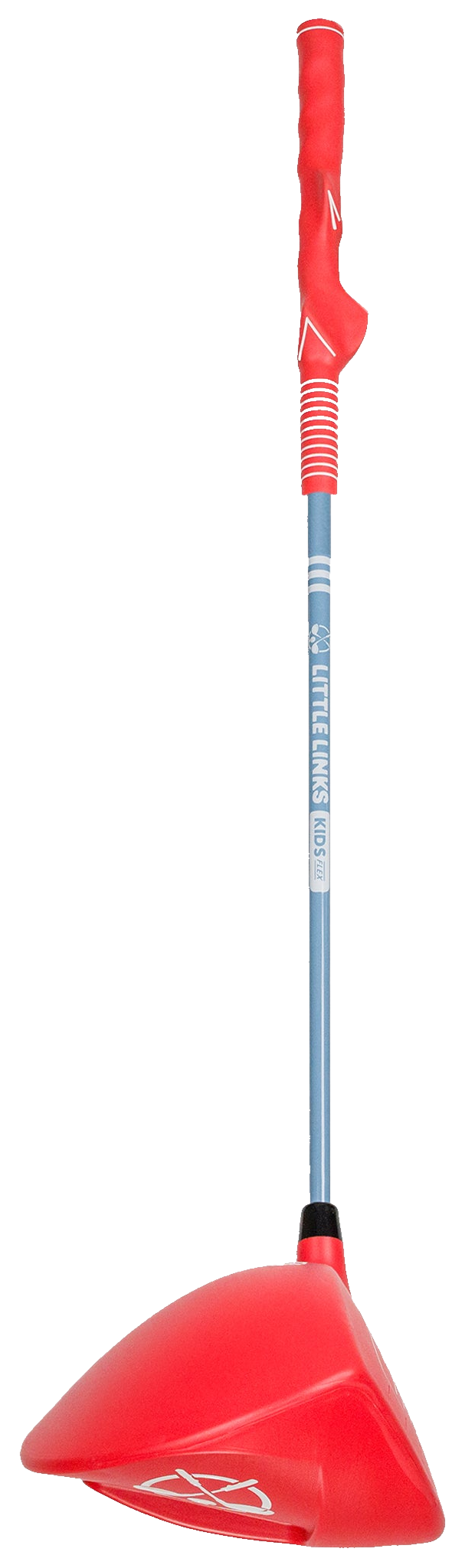
If your child wants to try hitting from a tee, choose a kids driver that fits and keep the first swings gentle and supervised.
When do lessons make sense?
Lessons can be helpful when a child is interested, safe around a club, and ready to listen to another adult. That fits the readiness-first approach in AAP guidance on organized sports. Lessons are usually not the right first step for a very young child who has never had a fun, low-pressure golf experience.
For preschool and early elementary ages, a good lesson should still feel like play. Short instructions, simple targets, and encouragement matter more than technical language. If the lesson makes the child want to come back, it’s doing its job.
Watch the reaction after the session
The best signal is not whether the swing looked perfect. It’s whether your child leaves proud, curious, and willing to pick up the club again.
How to keep golf fun over time
The first few weeks matter because they set the emotional tone. If golf becomes correction after correction, many kids will decide the game is not for them before they ever get enough turns to improve.
Rotate the format. One day can be a backyard target game. Another can be putting into a cup. Another can be a short trip to watch a parent hit balls. Let golf show up as family time, not a test.
Common mistakes parents make
The common thread is making golf too serious too fast. Young kids don’t need a launch monitor, a perfect takeaway, or a full bucket of balls. They need safety, attention, and a reason to smile after the ball moves.
- Starting with mechanics. Contact and enjoyment matter before swing theory.
- Practicing too long. A short happy session is more valuable than a long forced one.
- Using adult expectations. Young kids learn through play, not adult-style practice blocks.
- Comparing siblings or friends. Interest and coordination develop on different timelines.
Questions parents ask
Can a 2-year-old start golf?
A 2-year-old can be introduced to golf through supervised play, soft balls, rolling games, and short movement games. Formal instruction is usually too much at that age.
Should kids start with lessons or backyard practice?
For many young kids, low-pressure backyard play comes first. Lessons can help later if the child is interested, safe around a club, and ready to follow simple coaching.
How long should a first golf session be?
Keep the first session short. Ten fun minutes are better than thirty forced minutes, especially for preschool and early elementary ages.
Should my child use foam balls or real golf balls?
Use the ball that fits the setting. Foam or soft balls are better for tighter spaces. Real golf balls should only be used where the space is safe and supervised.
What if my child misses the ball?
Keep it light. Move the ball closer, make the target easier, or turn it into a game. Early misses are normal and should not become the main story of the session.
When should we try a real course?
Try the course after the child can stay safe, move with the group, and enjoy short stretches of play. A few relaxed holes are better than forcing a full round.