
Quick answer
Golf can be a lovely way to spend time outside together. Kids get to move, take turns, try again after a miss, and enjoy little successes along the way. Start with a short game and equipment that fits, then follow your child's interest. They don't need to play a full round to give golf a try.
Why this question is worth asking
Parents and grandparents often hear the same worries before a child ever holds a club. Golf looks slow. It looks like an adult game. It looks like it costs a lot before you know whether the child will care. Those worries are fair, and most of them come from watching adult golf, not from how a young child actually starts.
You can give golf a try without planning a full round. Start small and see what your child enjoys.
Myths and facts about kids golf
Myth: golf is too hard for young kids
The equipment can make a difference. A club that’s too long or heavy makes an early swing harder than it needs to be. Start with a kids club that fits.
Myth: golf is boring or too slow for kids
A full round may be too much for a young beginner. Try a short backyard game or a few putts and see what they enjoy.
Myth: golf is too expensive to even try
You don’t need a full set of clubs or a club membership to start. One fitted club, a few soft balls, and a yard or a driving range bay are enough for a first session. You can add equipment later if the child stays interested. The full-set question is its own decision, covered in do kids need a full set of golf clubs.
Myth: a child needs natural talent to start
A child doesn’t need natural talent to begin. The biggest barrier is usually the adult's expectation of a polished, adult-style swing. When the goal shifts from good mechanics to a fun first contact, the pressure drops and the child wants another turn. Talent can come later. The first job is simply to make the moment clear, safe, and worth repeating.
Myth: kids are too young until a set age
There is no single right age. HealthyChildren.org notes that children develop at different rates and that younger kids learn best through play, limited instruction, and flexible rules. Readiness depends on attention, coordination, and interest, not a fixed birthday. For how to read those signals, see what age should a child start golf.
What kids can enjoy about golf
Golf is not magic, and it’s fair to be skeptical of big promises. Here is what golf can offer a child, stated plainly:
- Outdoor activity: walking, swinging, and carrying a light bag get a child moving outside. HealthyChildren.org encourages age-appropriate physical activity for kids.
- Patience and turn-taking: golf asks a child to wait, take a turn, and try again, which is good practice for a young learner.
- Course etiquette: standing still during a swing, staying safe, and respecting others are simple habits golf teaches early.
- A lifetime, low-contact sport: golf has no tackling or collisions, and a child can keep playing it for decades and as a family.
Keep the limits honest too. Golf doesn’t promise better grades, calmer behavior, or a future scholarship, and it’s one good option among many youth sports. The benefits come from regular, fun play, not from pressure or scores.
How to give your child a good first experience
Whether golf turns out to be good for your child depends a lot on the first few sessions. Three simple moves help:
- Fit the equipment to the child: a lighter, shorter, child-sized club lets the child control the motion instead of fighting it.
- Keep sessions short and playful: a few focused minutes with a game beats a long, serious lesson for a young beginner.
- Let the child lead: follow their interest, celebrate effort over score, and stop while they still want more.
Do those three things and golf has a real chance to be good for your child, regardless of which club you start with.
Make the first try feel welcoming
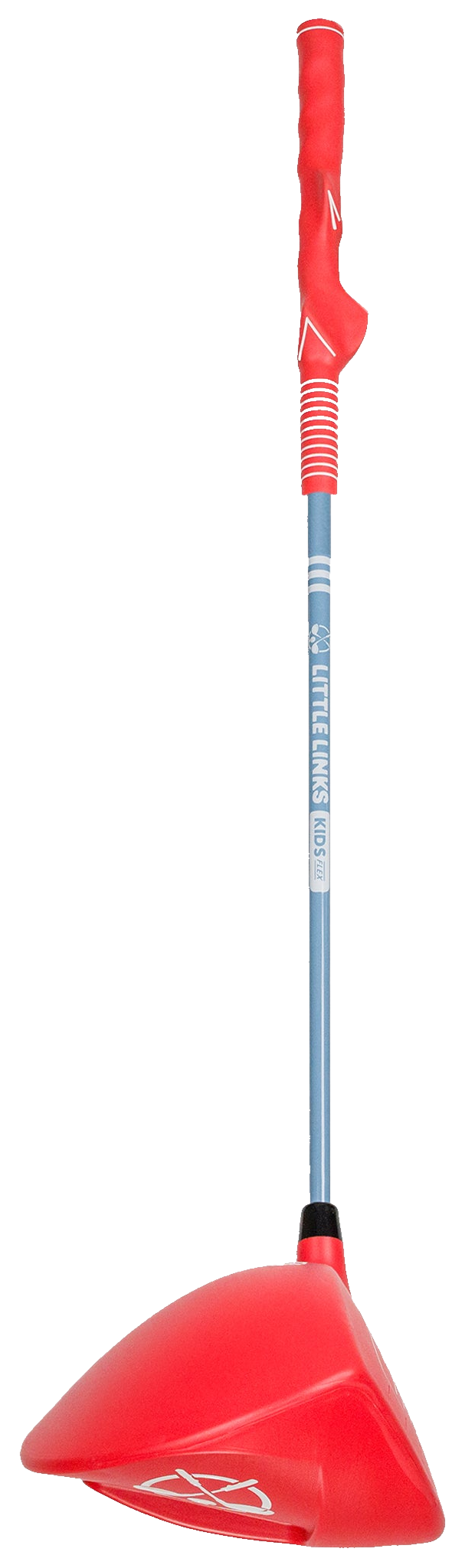
If your child wants to try hitting from a tee, the Big Swing Driver is one way to get started with a club made for kids. Check the fit, use a suitable practice space, and make it a game you can enjoy together.
FAQ
Is golf good for kids?
Golf can be good for kids when it fits their age and stays fun. It gives children outdoor activity, practice with patience, turn-taking, and course etiquette, and a low-contact sport they can play for life. Start with simple fitted equipment and short, playful sessions and let the child set the pace.
What are the benefits of golf for children?
Golf gives children outdoor physical activity, practice with patience and turn-taking, a chance to learn course etiquette, and a shared activity families can do together. It’s a low-contact sport kids can keep playing into adulthood. The benefits come from regular, fun play, not from pressure or scores.
Is golf too hard for young kids?
Golf is not too hard for most young kids when the equipment fits. A lighter, shorter, child-sized club and a tee-up or rolling setup let a young child make a simple motion. Trouble usually comes from adult-sized clubs and adult expectations, not from the child.
Is golf too expensive to start?
No. You don’t need a full set of clubs or a club membership to start. Many families begin with one fitted club at home, in a yard, or at a driving range. You can add more equipment later if the child stays interested.
Does a child need natural talent to start golf?
No. A child doesn’t need natural talent to start golf. The biggest barrier is usually adult expectations of a polished swing, not the child's ability. Short, playful sessions matter more than early mechanics.
What age can a child start golf?
There is no single right age. Readiness varies from child to child based on attention, coordination, and interest rather than a fixed birthday. Many children can start with simple, supervised play in the toddler and preschool years and build from there.