
Quick answer
You can introduce golf at home with a simple game and a few supervised swings. A junior coach or group clinic can help when your child wants more, enjoys playing with other kids, or is ready to follow a coach's directions. Both can be part of learning to love the game.
Why this decision matters
Parents often feel like golf has to start with a lesson, a full set, and a serious plan. It doesn’t. The first step should match the child, the setting, and the reason they’re interested.
HealthyChildren.org explains that younger children often need active play, limited instruction, flexible rules, and parent participation. That’s a useful way to think about early golf. A child doesn’t need a polished swing before they meet a coach. They need a good first feeling around the game.
The CDC's child activity guidance also frames movement by age. Children ages 3 to 5 should be active throughout the day, and children ages 6 to 17 need daily physical activity. Golf can be part of that when the session is suited to their age and enjoyable.
Keep it simple
Start with interest first. Add instruction when the child is ready for more structure.
Lessons or home first?
Use this as a route decision, not a permanent label. Many kids move through all three paths: home play, a group program, and individual coaching.
| Choose this path | When it fits | What to avoid |
|---|---|---|
| Home play first | The child is young, curious, easily distracted, or just wants to copy a parent for a few minutes. | Turning the parent into a swing coach with too many tips. |
| Group clinic or junior program | The child likes other kids, games, teams, and a coach-led structure without one-on-one pressure. | Choosing a program only because it looks advanced. |
| Private junior coach | The child asks for help, wants feedback, is ready for range or course habits, or gets tense when a parent gives instruction. | Using private lessons as a fix for every missed shot. |
When home play is enough
Home play is enough when the goal is introduction, interest, and first contact. Keep it short. Use one safe hitting direction. Let one child swing at a time. Give one cue, then let the child try.
A PGA coach's family golf tips recommend proper equipment, simple instruction, process praise, and remembering that golf has to stay a game. That’s exactly the tone home golf should have.
- Start with five to ten minutes.
- Use foam or lightweight plastic practice balls in small spaces.
- Give one job: brush the tee, roll to a target, or swing toward a color zone.
- Praise effort and setup more than results.
- Stop while the child still wants another turn.
If you need ready-to-run activities, use these backyard golf games for kids. If session length is the issue, read how long kids should practice golf.
When lessons start to help
Lessons help when the child is ready for more than a parent-run game. That might mean they want to know why the ball goes where it goes, they enjoy listening to a coach, or they need help with safety and range habits before doing more.
The PGA's youth golf parent guide keeps fun at the center and points parents toward junior pathways such as PGA Jr. League, Operation 36, U.S. Kids Golf programs, Drive Chip & Putt, LPGA*USGA Girls Golf, and PGA Camps. The route can be social, game-based, or coach-led.
A good junior program gives your child encouragement, games to share, and another adult to learn from. Look for a coach who makes them feel welcome.
Lesson readiness signs
The child can wait their turn, follow simple safety directions, stay engaged for a short session, and accept feedback from another adult.
How to choose a junior golf coach
A good junior coach should make the child want to come back. The PGA's junior coach guidance recommends looking for PGA or LPGA Professionals, asking for recommendations, observing the coach with kids, and looking for a fun, safe environment.
Before you book, ask practical questions:
- Do you teach kids around this age?
- Is this lesson play-based, technical, or a mix?
- Do you provide clubs if the child doesn’t have their own?
- Can parents watch, help, or step back?
- What should the child practice at home afterward?
If the lesson is already booked, use the first golf lesson checklist for what to bring and what to ask.
Group lessons or private lessons?
Group lessons can be a strong first step for kids who like games, teams, and other children. A group setting can make golf feel social instead of serious. Private lessons make sense when a child needs focused attention, has a clear question, or responds better one-on-one.
Do not choose private lessons just because they sound more advanced. For many beginners, the better route is the one that keeps the child relaxed and willing to repeat the experience.
Something familiar for home practice
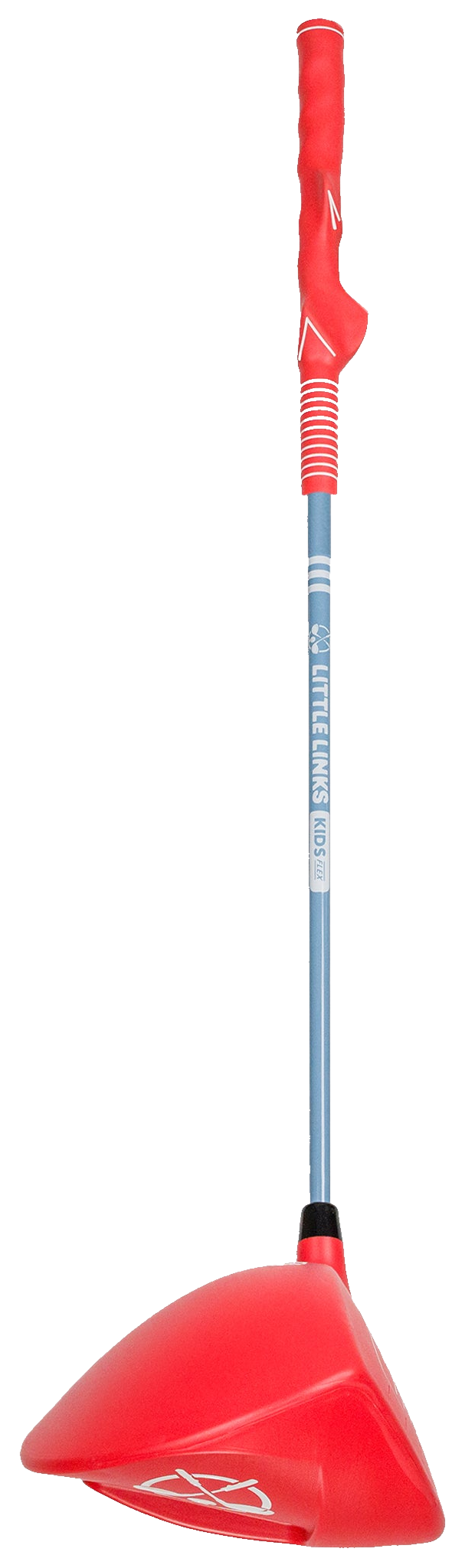
The Big Swing Driver can be part of short, supervised practice at home when it fits your child and there's room to swing. A coach can help you choose what to practice next. Keep it simple enough that your child looks forward to trying again.
A simple first-month plan
If you’re not sure what to do next, use a low-pressure month:
- Week 1: Try two short home sessions with foam or plastic practice balls.
- Week 2: Add one target game and one safety habit, such as waiting behind the hitter.
- Week 3: Visit the range or putting green at a quiet time if the child is still interested.
- Week 4: Decide whether the next step is more home play, a group clinic, or a junior coach.
The goal is not to rush the child into a program. The goal is to give them enough good turns to know whether they want the next step.
What to avoid
The lesson decision gets harder when parents treat every early swing like evidence. Keep the first stage lighter.
- Do not use home play to diagnose everything. If the child is stuck, a coach may help.
- Do not force lessons too early. If the child only wants five playful swings, honor that.
- Do not make the coach a threat. A lesson should feel like a fun next step, not a punishment for missing.
- Do not buy equipment that fights the child. Start with right-sized, child-focused equipment.
- Do not compare the child to another junior golfer. Compare the next session to the last good feeling.
FAQ
Should kids take golf lessons or learn at home first?
Most young beginners can start with supervised home golf play before formal lessons. Use short, safe, playful sessions to build interest and simple safety habits. Add a junior coach, clinic, or program when the child wants more structure, can follow directions, and enjoys feedback.
What age should kids start golf lessons?
There is no single age that fits every child. Many younger kids need play, simple instruction, and parent participation first. Lessons or clinics usually make more sense when the child can follow safety directions, stay engaged for a short session, and respond well to another adult's coaching.
Can parents teach kids golf at home?
Parents can introduce golf at home when the setup is supervised, simple, and low-pressure. The your part is not to deliver a technical swing lesson. It’s to keep the space controlled, give one cue at a time, praise effort, and stop while the child still wants another turn.
When is a junior golf coach worth it?
A junior golf coach is worth considering when the child wants more structure, is asking for help, gets frustrated with parent instruction, is ready for range or course habits, or would enjoy a group setting with other kids. Look for a coach who works well with children and keeps the environment fun and safe.
Are group golf lessons or private lessons better for kids?
Group lessons can be a good first step for kids who enjoy social learning and games. Private lessons can help when a child needs individual attention or is ready for more focused coaching. The better choice depends on the child's age, temperament, goals, and attention span.
What should kids learn before their first golf lesson?
Before the first lesson, kids can learn simple safety habits, how to wait behind the hitter, how to take turns, and how to make a few playful swings without pressure. They don’t need a polished swing before seeing a coach.
What equipment do kids need to learn golf at home?
For home golf play, kids need adult supervision, a controlled space, a practice ball that fits the space, and equipment that fits their size and swing side. The Little Links Big Swing Kids Golf Driver product page lists multiple size ranges, right- and left-handed options, oversized practice balls, tees, and a training grip.
Sources
- HealthyChildren.org: Is Your Child Ready for Sports?
- CDC: Child Activity: An Overview
- PGA: A Parent's Guide: How to Start Playing Youth Golf
- PGA: How to Pick the Perfect Junior Golf Coach
- PGA: 9 Tips from a PGA Coach to Help Your Kids Enjoy Golf
- First Tee: Parents' Guide
- U.S. Kids Golf: Junior Golf Club Fitting
- Little Links Big Swing Kids Golf Driver