
Quick answer
Keep practice short enough that your child still enjoys it. As a starting idea, try 5–10 minutes for ages 2–5, 10–20 minutes for ages 6–8, or 20–30 minutes for ages 9–12. These are suggestions, not a schedule to complete. Stop sooner if your child is tired, frustrated, or ready for something else.
The real question is not only minutes
There’s no bucket of balls your child has to finish. Watch their energy, attention, and interest, and be ready to stop earlier than you planned.
That’s the right question. Early golf practice should make the next swing easier to say yes to. If a child leaves tired, embarrassed, or annoyed that the bucket is still not empty, the session went too long even if the clock says it was short.
Keep it simple
Pick a short plan, watch the child, and end before practice turns into a negotiation.
Kids golf practice length by age
These ranges are practical starting points for beginner practice, not medical rules. The sources below support developmentally appropriate activity, shorter practice for young children, rest, and pressure control. Your child's attention and safety should still make the final call.
| Age range | Start here | How often | Stop signal |
|---|---|---|---|
| Ages 2 to 5 | 5 to 10 minutes of playful swings, rolling games, or tee contact | 1 to 3 light sessions a week, plus normal active play | They stop listening, wander off, swing carelessly, or only want to play pretend |
| Ages 6 to 8 | 10 to 20 minutes with one simple target or one setup cue | 1 to 3 short sessions a week if they ask to keep going | Contact gets worse because they’re tired, rushed, or frustrated |
| Ages 9 to 12 | 20 to 30 minutes, or a short range block with breaks | 2 to 4 sessions a week for motivated beginners, with rest protected | They start grinding, chasing perfect contact, or losing safe swing control |
Why shorter practice usually works better early
HealthyChildren.org's sports-readiness guidance says children ages 2 to 5 have limited balance and attention span, learn through play, and need limited instruction. It also says young children benefit from smaller equipment, shorter practices, flexible rules, and less focus on scorekeeping.
Golf fits that pattern. A young beginner doesn’t need a full practice block. They need a safe space, one simple job, a few chances to make contact, and a parent who knows when to stop.
A HealthyChildren.org summary of the American Academy of Pediatrics organized-sports guidance also keeps the focus on fun, developmentally appropriate skill building, parent support, and avoiding overscheduling, fatigue, and pressure. That’s why the table above uses short ranges instead of an adult practice plan.
How often should kids practice golf?
For a beginner, one to three short sessions a week can be plenty if the child still wants to come back. More is not automatically better. The point is repeatable interest, not filling a calendar.
If practice becomes organized training, use a stricter ceiling. The National Athletic Trainers' Association statement recommends that young athletes should not play more organized sport hours per week than their age in years and should take at least two days off from training and competition each week.
That doesn’t mean a 6-year-old needs six hours of golf. It means six hours is a ceiling for organized sport load, not a target. For Little Links-style early golf, the smarter move is usually the opposite: short, positive sessions that leave room for free play.
How many golf balls should a kid hit?
Do not start with a ball count. Start with a simple job. That might be "make three safe swings," "tap five balls toward the towel," "tee one ball and watch it fly," or "take turns with Dad or Mom."
A fixed ball count can turn practice into a chore. A child may be done after eight balls. Another child may want twenty. A small number of focused turns is better than forcing every ball in the bucket.
- Pick one job: contact, target, setup, grip, or balance.
- Use a small batch: three to five balls at a time keeps the session from becoming automatic.
- Take a break: water, reset, or let the child watch you hit one.
- End on a clear win: a safe swing, a better sound, a laugh, or "I want one more."
Change the session by setting
Practice length should change with the space. A living-room putting game is not the same as a backyard tee station, a range bay, or a lesson follow-up.
| Setting | Good practice shape | Best next link |
|---|---|---|
| Indoor | Putting, grip setup, balance games, or no-ball swings | How should kids hold a golf club? |
| Backyard | Foam-ball contact, tee games, and clear swing-zone rules | Safe backyard golf practice for kids |
| Driving range | Small bucket, one target, breaks, and a good place to stop | How to take a kid to the driving range |
| After a lesson | One coach cue repeated briefly, not a second full lesson at home | What should kids bring to a first golf lesson? |
What to say during practice
Your encouragement matters. Try “want to switch targets?” or “let’s take a water break.” Give your child a say in what comes next.
Use language that protects curiosity: "try one more," "that one sounded better," "want to switch targets," "water break," or "let's end on that one." Avoid turning every miss into a lesson. For a beginner, safe repetition and a good ending are often more valuable than another correction.
Keep the equipment simple
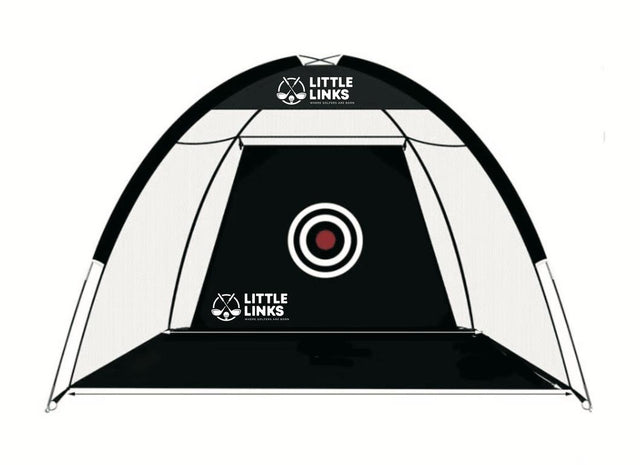
A club that fits helps you spend less of a short session adjusting the setup. If you're choosing a first driver, check the Big Swing Driver's sizes and swing-side options. Set out a few practice balls, pick a target, and let your child enjoy their turns.
More help: plastic golf set vs real kids golf club
When to stop practice
Stop before the swing gets careless. Stop before the child has to be talked into every ball. Stop before you start coaching out of frustration.
A happy place to stop
End on a safe swing, a better sound, a made-up game, or a simple "we can do this again." The next session starts with the memory of how the last one ended.
FAQ
How long should kids practice golf?
Start with short sessions: about 5 to 10 minutes for ages 2 to 5, 10 to 20 minutes for ages 6 to 8, and 20 to 30 minutes for ages 9 to 12. Treat those as parent planning ranges, not medical rules, and stop sooner if safety, attention, energy, or interest drops.
How often should kids practice golf?
For beginners, one to three short sessions a week can be enough if the child stays interested. Older or more motivated kids may want more, but organized training should protect rest days and should not crowd out free play, school, sleep, or other activities.
How long should a toddler practice golf?
For toddlers and very young beginners, start with 5 to 10 minutes or less. Use playful swings, rolling games, or tee contact, and stop as soon as attention, safety, or interest drops.
How many golf balls should a kid hit?
Use a small number of balls and let the child's focus decide the session. A few good swings, a tee game, or a putting challenge can be better than forcing a child to finish a bucket.
Should kids practice golf every day?
Daily playful swings can be fine when they’re light, voluntary, and safe, but daily organized training is different. If golf becomes structured training, build in rest days and keep the total weekly load age-appropriate.
When should I stop a kids golf practice session?
Stop when the child gets tired, starts swinging carelessly, loses interest, gets frustrated, or stops listening to safety rules. Ending while the child still wants another turn is usually the right call.
How do I keep golf practice fun for kids?
Keep the session short, choose one simple job, use small batches of balls, switch targets when interest fades, and end on a moment the child wants to repeat.
What should kids practice first in golf?
Start with setup, holding the club, one safe swing direction, and simple contact games. Young beginners don’t need a full swing checklist. They need one clear job and a practice setup they can repeat.
Sources
- CDC: Physical Activity Guidelines for Children
- HealthyChildren.org: Is Your Child Ready for Sports?
- HealthyChildren.org: AAP Encourages Organized Sports for Fun
- NATA: Youth Sports Specialization Recommendations
- First Tee: Parents' Guide
- PGA: A Parent's Guide to Golf Fitness for Kids
- U.S. Kids Golf: Junior Golf Club Fitting
- Little Links: Big Swing Kids Golf Driver