
Quick answer
Try a towel target, a tee-brushing game, or taking turns aiming at a colorful spot in the grass. Use soft practice balls, keep everyone clear of the club and ball path, and let one child swing at a time. Keep the game short and celebrate the little wins.
Why backyard golf games work
Backyard golf works best when it feels like active play first and instruction second. The CDC's child activity guidance says children ages 3 to 5 should be active throughout the day, while children ages 6 to 17 need daily physical activity. A short golf game can be one way to make movement part of family time.
The key is not to turn the yard into a full driving range. HealthyChildren.org notes that younger children often need fun, safety, appropriate equipment, flexible rules, and limited instruction. That’s the right frame for a first-swing backyard game.
Keep it simple
Make the next swing easier, not more technical.
Set up the yard before the game starts
A backyard golf game needs a controlled space before it needs a score. If the space can’t stay controlled, switch to no-ball swings, foam-ball rolling games, or a supervised range session.
- Pick one hitting direction and keep everyone else behind the child.
- Use foam or lightweight plastic practice balls for home games.
- Keep windows, cars, pets, siblings, and walkways out of the target area.
- Let only one child swing at a time.
- Use real golf balls only in spaces made for real ball flight.
If you’re still checking whether the yard can handle practice, start with the backyard golf safety checklist. If the ball choice is the confusing part, read what golf ball kids should practice with.
6 backyard golf games for kids
These games are meant for short, parent-controlled sessions. Give the child one rule, one target, and one reason to take another turn.
| Game | How to play | What it teaches |
|---|---|---|
| Brush the tee | Put a tee in the ground with no ball. The child tries to brush the top of the tee three times. | Low-pressure swing path and contact awareness. |
| Hit the color zone | Use two towels, cones, or chalk circles as big color zones. A foam or plastic ball only has to move into one zone. | Direction without adult swing jargon. |
| Roll to a target | Use a putter, short club, or gentle chipping motion to roll a foam ball toward a bucket, towel, or hula hoop. | Touch, aim, and calm turn-taking. |
| Landing-zone ladder | Place three safe target zones at short, medium, and longer distances. Let the child choose the zone before swinging. | Target selection and ownership. |
| Parent-child turns | The child hits one practice ball, then the parent tries the same target with the same easy rule. | Connection and pressure-free modeling. |
| Three-station circuit | Set one tee brush station, one roll-to-target station, and one hit-the-zone station. Do one minute at each station. | Movement, variety, and a clear stopping point. |
Choose the ball by the space
For most backyard games, start with foam or lightweight plastic practice balls. Foam is better for close targets and gentle first-contact turns. Plastic can give a little more outdoor feedback when the space is open and an adult is controlling the area.
First Tee DRIVE describes youth golf activity plans that use introductory equipment and can be delivered in indoor or outdoor settings. That’s the useful lesson for a parent at home: adapt the equipment to the setting instead of forcing the child into a full-course version of golf too early.
Simple ball rule
If a missed shot would create a problem, the ball is wrong for that space.
Keep the game short enough to repeat
A good backyard session often ends before the parent thinks it should. Five to ten minutes can be plenty for a young child, especially if they made contact, laughed, and still want another turn.
Celebrate the little things: touching the tee, picking a target, or taking a turn. A high five and a new game can keep the afternoon light.
- Use one cue at a time.
- Let the child choose the target when possible.
- Switch games before repeated misses take over.
- End with a successful turn, not a lecture.
If the child keeps missing the ball, use the contact troubleshooting guide before adding more instructions.
Bring Big Swing into the game
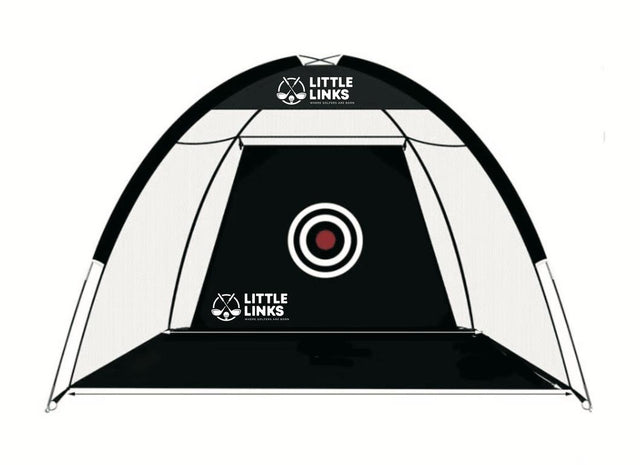
If your child has a Big Swing Driver, try a short target game with one of its soft practice balls. Let them pick the towel or color to aim at. Keep everyone clear of the swing and missed shots, then take turns cheering each other on.
More help: how to make golf fun for kids
What to avoid
Backyard golf gets harder when the adult tries to make it look like a real round too soon. Keep the setup small and controlled.
- Do not use real golf balls in a tight yard. Use a space built for real ball flight instead.
- Do not score every swing. Score the game only if the child enjoys it.
- Do not give five tips after a miss. Change the target, tee, ball, or distance first.
- Do not let siblings drift near the swing area. Everyone waits behind the hitter.
- Do not keep playing after the child is done. A short good session beats a long frustrated one.
FAQ
What golf games can kids play in the backyard?
Good backyard golf games for kids include brush the tee, hit the color zone, roll to a target, landing-zone ladder, parent-child turns, and a three-station circuit. Keep the goal simple, use foam or lightweight plastic practice balls, and stop while the child still wants another turn.
Are backyard golf games safe for kids?
Backyard golf games can be appropriate when an adult controls the hitting direction, keeps siblings and pets out of the swing area, chooses a practice ball that fits the space, and allows only one child to swing at a time. If the yard can’t provide a clear swing zone and target area, use no-ball games, foam-ball games, or a supervised range instead.
Should kids use foam or plastic golf balls for backyard games?
Most young beginners should use foam or lightweight plastic practice balls for backyard games. Foam is the lower-pressure choice for close targets and gentle contact. Plastic can add a little outdoor flight feedback when the space is open and supervised.
What is a good first golf game for a toddler?
A good first golf game for a toddler is brush the tee or roll to a target. The goal is not a full swing lesson. The goal is one simple movement, one clear target, and a short positive turn.
How long should a backyard golf game last for kids?
Keep backyard golf games short. For many young kids, five to ten minutes of focused turns is enough. End before the child is tired or frustrated so the game stays something they want to repeat.
Can the Little Links Big Swing Driver be used for backyard games?
If your child has a Big Swing Driver, try a short target game with one of its soft practice balls. Let them pick the towel or color to aim at. Keep everyone clear of the swing and missed shots, then take turns cheering each other on.