
Quick answer
A club made for kids is usually a better starting point than an adult hand-me-down. An adult club may be too long or heavy, even after the shaft is shortened. Look for a club that lets your child stand comfortably, hold the grip, and swing without losing balance.
Why parents reach for an adult club first
The hand-me-down club is a normal idea. A parent or grandparent has an old 7-iron in the garage, a child wants to try golf, and nobody wants to buy a full set before knowing if the child likes it.
The problem is that the first tool shapes the first experience. If the club is long, heavy, stiff, or hard for small hands to hold, the child may fight the club more than the golf ball. That can make early swings feel awkward before the parent ever gets to teach anything useful.
Parent forums and range conversations are full of the same question: is an old adult club good enough for a first try? The better answer is not yes or no by age. It’s whether the child can hold, aim, and swing the club without the club taking over.
The adult-club problem is not just length
Length is the obvious issue, but it’s not the only one. An adult club can also bring adult head weight, adult shaft feel, and an adult-size grip. A child may choke down and still have too much clubhead pulling on the swing.
Choose around your child’s current height, swing side, and comfort. An old club being available doesn’t mean it will fit.
The garage-club test
If the club makes the child change posture, grip, balance, or tempo before they even swing, it’s probably not a good repeat-practice tool.
Does cutting down an adult club fix it?
Shortening an adult club doesn’t automatically make it suitable for a child. Check the weight, grip, and control as well as the length before letting them use it.
Cutting down the shaft may reduce length, but it doesn’t automatically change the adult head, the grip thickness, or the way the shaft feels to a young player. That matters because small hands and slower beginner swings need control more than adult-style club specs.
If you’re unsure whether a hand-me-down fits, ask a junior coach before your child uses it.
A simple fit check before your child swings
You don’t need a full fitting bay to spot an obvious mismatch. Watch the child hold the club before you ask for a swing.
| Check | What to look for | What it means |
|---|---|---|
| Length | The child has to stand too upright, reach too far, or choke down most of the grip. | The club is likely asking for adult posture instead of child control. |
| Weight | The clubhead pulls the swing down, the child loses balance, or they need two hands just to lift it. | The club is probably too hard to repeat calmly. |
| Grip | The handle looks too thick for the child's fingers, or both hands can’t sit together comfortably. | Hand placement may be harder than it needs to be. |
| Control | The child swings fast to move the club rather than making a small, balanced motion. | The equipment is driving the session instead of the parent guiding it. |
When an adult club may be okay for a few swings
A brief supervised try is different from choosing a practice club. If a child is older, strong enough to hold the club safely, and only wants to take a few slow swings with a parent standing close, an adult club can be a short curiosity moment.
Do not make that the default if the child is very young, can’t control the clubhead, can’t keep a safe swing space, or starts missing because the club is dragging them out of balance.
HealthyChildren.org reminds parents that youth sports should fit the child's readiness, with age-appropriate equipment, safety, and fun. That applies here: the right club is the one that helps the child make a controlled swing in the setting they’re actually using.
What a child-sized club should solve
A better beginner club doesn’t need to be complicated. It should make the first swing easier to organize.
- Right length: the child can stand naturally without reaching or crouching.
- Manageable weight: the child can lift, set, and swing the club without the clubhead taking over.
- Comfortable hand placement: both hands can sit together without the grip feeling too large.
- Correct handedness: right- or left-handed setup matches the child instead of the club available in the garage.
- Simple practice goal: the equipment helps the parent keep the session focused on contact, not adult swing mechanics.
Your child doesn’t need a full adult bag to try golf. One club they can control is a good starting point.
A driver made for kids
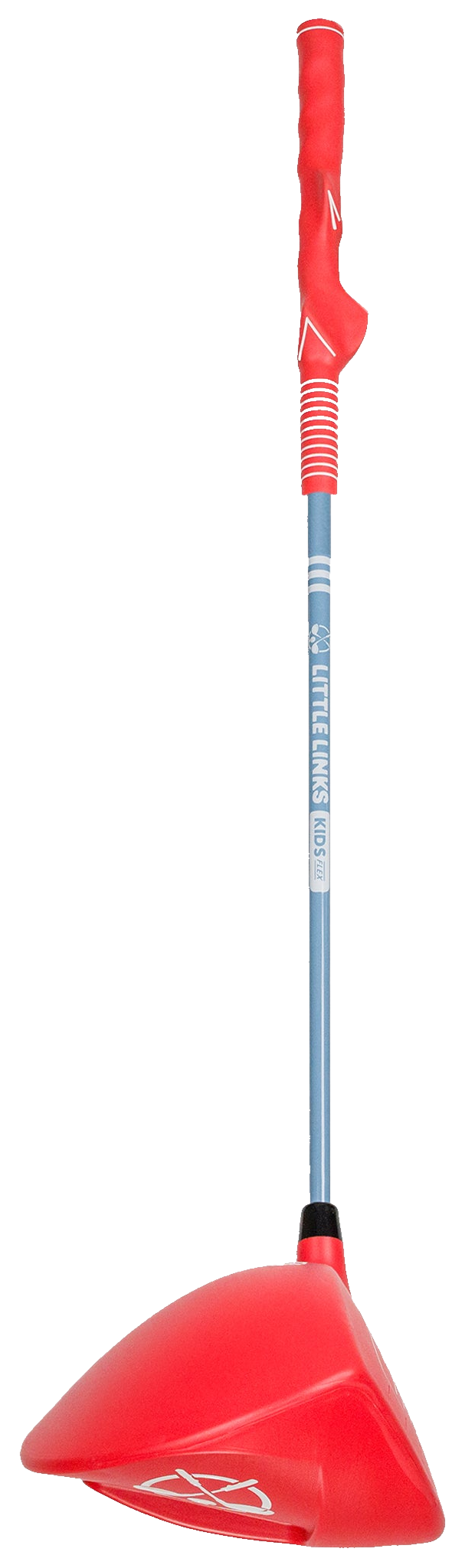
The Big Swing Driver pairs an oversized head with a training grip and sizes for young golfers. Check your child's height and swing side before ordering. They don't need a whole bag to start enjoying a club made for them.
More help: kids golf club size by age · what golf club a child should use first · how kids should hold a golf club
What to try next
Use the adult club only if the child can hold it calmly, keep a safe swing space, and make a few slow swings without the club pulling them around. Even then, treat it as a trial, not the practice plan.
For repeat beginner practice, choose junior-fit equipment. That doesn’t mean buying a full set on day one. It means putting one right-sized club in the child's hands so the first few sessions can be about contact, confidence, and wanting another turn.
FAQ
Can a child use adult golf clubs?
A child can make a few supervised swings with an adult club, but most young beginners should not use adult clubs for regular practice. Adult clubs are usually too long, too heavy, and built around adult speed and strength.
Are cut down adult golf clubs good for kids?
Cutting down an adult club doesn’t automatically make it a junior club. The club may still have an adult head, adult grip thickness, and a shaft feel that’s hard for a young child to control.
How do I know if a golf club is too heavy for my child?
Watch the child before the ball moves. If they struggle to lift the club, drag it through the swing, lose balance, or need to choke down so far that the grip feels awkward, the club is probably making practice harder than it needs to be.
Should kids start with junior golf clubs or adult clubs?
Most beginners should start with child-sized equipment matched to height, swing side, strength, and practice setting. Adult clubs can wait until the player is physically ready and a coach, fitter, or trusted golf source confirms the fit.
When can a junior golfer move into adult golf clubs?
A junior golfer can move toward adult clubs when their height, strength, swing speed, and control make adult equipment appropriate. Do not use age alone. Fit, comfort, and repeatable control matter more.
Where does the Little Links Big Swing Driver fit?
The Big Swing Driver pairs an oversized head with a training grip and sizes for young golfers. Check your child's height and swing side before ordering. They don't need a whole bag to start enjoying a club made for them.