
Quick answer
Help with the little things: water, snacks, finding the ball, choosing a club, and knowing when it's time to move along. Give encouragement more often than swing tips. A good day caddying for your child is one where you both enjoy being out there together.
Enjoy being their caddie
When an adult walks beside a child on the course, the instinct is to fix every grip, stance, aim, and miss. That usually makes the round feel heavier. A better parent-caddie job is simple: carry the details, protect the child from unsafe turns, help the group keep moving, and celebrate the next shot.
PGA of America junior-golf guidance tells parents to prioritize fun and avoid overcoaching technical swing details early. That’s the tone to bring into a family round.
Keep it simple
If the child is safe and wants another turn, you’re doing the job.
What to carry
U.S. Kids Golf's caddie tips list practical round supplies such as snacks, drinks, sunscreen, tees, a golf ball, a divot repair tool, a pencil, and a coin or ball marker. For a beginner child, keep that same idea but scale it down to the outing.
- Water and sunscreen for outdoor rounds.
- A small snack if the course allows it.
- Tees, golf balls, a marker or coin, and a pencil.
- One simple club choice for the next shot.
- A towel or small repair tool if the course setting calls for it.
If your child is still at the first-club stage, pair this article with what golf club a child should use first.
Before the round, remove choices
Kids do better when the first tee is not a pile of decisions. Before the child is up, decide where they will start, which club they will use, whether the ball should be teed up, and when you will pick up if pace requires it.
| Parent-caddie task | Simple version | What it prevents |
|---|---|---|
| Choose the starting spot | Use the shortest tee or approved short starting spot. | Long holes that feel impossible before the child swings. |
| Choose the next club | Use one simple club unless the child is ready for more choices. | A bag decision before every shot. |
| Choose the cue | Pick one cue, such as "brush the grass" or "swing to the target." | A lesson after every miss. |
| Choose the exit | Pick up after a few swings in casual play when pace or mood requires it. | A child stuck on one hole until golf stops being fun. |
During the round, help without hovering
U.S. Kids Golf notes that a caddie may help look for balls, determine distance, rake bunkers, fix divots, repair ball marks, and help the player make strategies and decisions in a timely manner. For a young beginner, translate that into quiet help.
- Stand where the child can see you, but not in the swing path.
- Watch the ball so the child doesn’t have to panic after contact.
- Help the child get ready before it’s their turn.
- Use one short cue, then let the child swing.
- After the shot, move forward instead of replaying the miss.
If the child is already upset, read what to do when your child gets frustrated with golf before turning the round into another string of corrections.
Keep pace without rushing the child
Help your child get ready before it’s their turn, watch the ball, and move along after the shot. Keeping pace doesn’t mean rushing them into a swing.
- Use comfortable tees or child-appropriate starting spots.
- Use ready golf when it’s safe and responsible.
- Limit practice swings to one simple rehearsal.
- Help watch all balls, not just the child's.
- Pick up and move on in casual formats when the hole is no longer useful.
- Let faster groups play through when needed.
For a first short outing, use the three-hole beginner plan as the round format, then use this article as the adult's job description.
What to say after good and bad shots
A parent caddie can make a bad shot feel normal or make it feel like failure. U.S. Kids Golf tells caddies to encourage players after good and bad shots and make sure they’re having fun. Keep the language short.
- "Good swing. Let's go find it."
- "Nice try. You get another turn up by mine."
- "That one was safe. We are moving."
- "Great job waiting until it was your turn."
- "Let's stop after this hole while it still feels good."
Avoid the long version: grip lecture, stance lecture, head-down lecture, score lecture. Save teaching for a practice setting or a coach.
Match the help to the child
HealthyChildren.org notes that young children have limited attention spans and learn through play, exploration, and copying others. It also recommends age-appropriate settings, equipment, rules, and safety priorities for sports.
Let your child know that a miss is okay. Your encouragement helps make the course somewhere they want to come back to.
Better question
Not "Did we teach the swing?" Ask "Does the child want another golf day?"
Help your child get ready for their turn
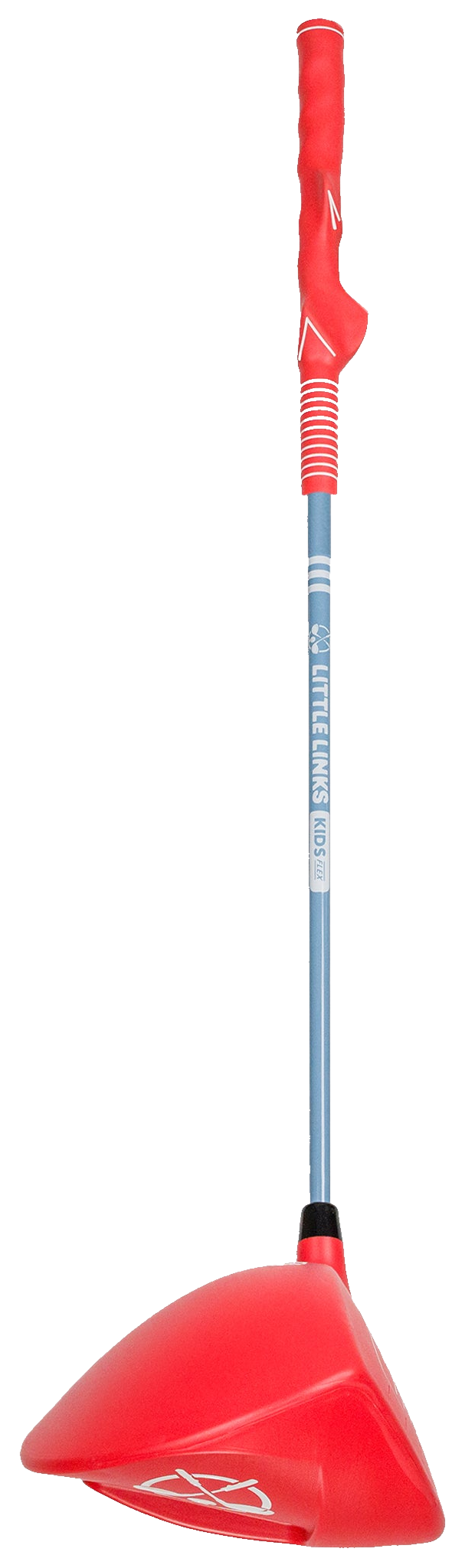
Choose the club before it's time to hit and let your child settle their hands on the grip. If they're using a Big Swing Driver, check the fit and course equipment rules before the outing. Then you can spend more of the day enjoying the walk together.
More help: what golf club a child should use first
What not to do
A parent can be helpful and still overdo it. Watch for these traps.
- Do not coach every shot. One cue is enough on the course.
- Do not keep score if score changes the mood. Count good turns instead.
- Do not make the child finish every hole. In casual play, picking up can protect pace and mood.
- Do not argue with the child's swing in public. Save technical work for practice or a coach.
- Do not ignore the group behind you. Move efficiently, wave groups through, and follow course staff guidance.
FAQ
What should a parent caddie carry for kids golf?
A parent caddie should carry water, sunscreen for outdoor rounds, a small snack if the course allows it, tees, golf balls, a ball marker or coin, a pencil, and any simple equipment the child is using. Keep the setup light so the adult can focus on safety, pace, and encouragement.
How much should parents coach kids during golf?
Parents should coach less than they think during a round. Use one short cue only when the child needs it, then return to helping with safety, pace, and simple choices. If the child needs technical instruction, that’s a better job for a coach or a separate practice session.
What should parents say after a bad golf shot?
Say something that keeps the child moving and calm, such as "good swing, let's go find it" or "nice try, we get another turn." Avoid a long swing correction after every miss. The round should feel like shared time, not a test.
How can a parent caddie help with pace of play?
A parent caddie can help by getting the child ready before it’s their turn, choosing a simple club, limiting practice swings, helping watch the ball, picking up in casual formats when pace requires it, and letting faster groups play through when needed.
Should grandparents caddie for kids golf?
Yes, grandparents can be excellent caddies when they keep the job simple: carry the small details, help the child stay safe and ready, and make the outing feel positive. They don’t need to give technical swing lessons to make the round valuable.
When should a parent stop giving swing tips?
Stop giving swing tips when the child looks confused, rushed, frustrated, unsafe, or less excited to take another turn. On the course, the adult's first job is to keep the child safe, moving, and interested enough to want to play again.